




-
Stay Informed with the News
-
Learn Something New with Audiobooks and Courses
-
Take Calls and Manage Tasks Hands-Free
-
Listen to Focus Sounds and Ambient Audio
-
Stay Entertained Without Scrolling
-
How Clip-On Ear Designs Ensure Safety and Awareness
-
How to Choose the Right Earphones for Your Commute to Work
-
Final Thoughts
-
Frequently Asked Questions
Most people treat their commute to work like something to get through. They stare at their phones, scroll for a bit, and wait for the journey to end.
But when you add up the numbers, the commute to work takes up a lot more of your life than it feels like it does. If you take an average one-way commute of around 29 minutes, that's close to an hour a day, five hours a week, and well over 200 hours across a working year. By December, you've spent the rough equivalent of eight or nine full days just travelling to and from the office.
You can make good use of this time with a good pair of earphones. That same 30-minute journey can be used for learning, staying informed, taking a call, or simply giving yourself a proper wind-down before a long day.
Here are some of the best ways to use your earphones during your commute to work:
Stay Informed with the News
A 30-minute journey is almost exactly the right length for a daily news roundup, an industry update, or a single episode of a conversation show. The BBC, The Guardian, and a huge number of independent creators publish fresh episodes every morning. By the time you step off the bus, you've already caught up on the latest news, without once having to sit and doom-scroll through a feed.
Many people who listen to the news during commutes consistently report feeling productive. That sense of having used the time well carries over into how you feel at your desk.
Learn Something New with Audiobooks and Courses
A chapter a day on the commute really goes a long way. Listen to an audiobook for 15 minutes each way, and you can get through a full non-fiction book in under two weeks without setting aside any extra time.
Platforms like Audible, Spotify, and Blinkist are built for exactly this kind of listening. Some commuters also use the journey for audio-based online courses.
Take Calls and Manage Tasks Hands-Free
For commuters who want a head start before they arrive, earphones with a decent microphone make that straightforward without requiring you to hold a phone to your ear. You can dial into a morning meeting, run through a task list with a voice assistant, or leave yourself a voice note while the train is still moving.
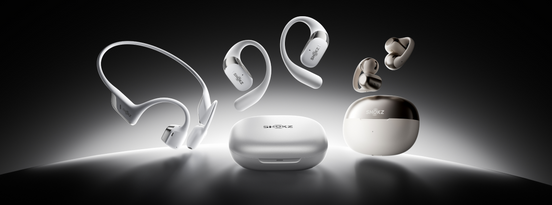
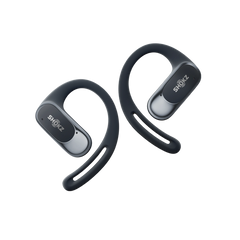
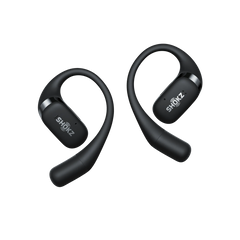
The Shokz OpenDots ONE handles this particularly well. It’s a clip-on earbud that sits neatly on the ear, and the AI-powered microphone keeps your voice clear even on a busy platform or against train background noise. For commuters who are regularly on calls before they've even sat down at their desk, that kind of reliability matters.
Listen to Focus Sounds and Ambient Audio
Not everyone uses the commute to be productive. Some people just want to arrive in a calm, settled headspace before a demanding day. Ambient audio, lo-fi music, rain sounds, or binaural beats work well for this. It gives your mind something steady to settle into without asking much of your attention. It's a small routine, but many people find it makes a real difference to how they start the morning.
Stay Entertained Without Scrolling
Scrolling through social media on a commute is tiring in a way that's hard to put your finger on. You finish the journey feeling vaguely restless and a bit flat. Switching to audio sorts this out. A good playlist, a comedy podcast, or the next chapter of a story gives your eyes a proper rest while still keeping you entertained. You arrive at work feeling a bit more like yourself.
How Clip-On Ear Designs Ensure Safety and Awareness
There's a safety concern around earphones and commuting. Standard in-ear earphones seal off the ear canal. That's fine when you're sitting on a quiet train with nothing much to react to. It's a very different situation when you're walking to a station, crossing a road, or cycling through traffic. Missing a car horn, a cyclist's bell, or a platform announcement can cause genuine problems.
Open-ear clip-on earbud designs are much safer in these scenarios. They sit outside the ear canal rather than blocking it, so sounds from your environment still reach you naturally. You hear your audio and your surroundings at the same time.
This is precisely what makes designs like the OpenDots ONE well-suited to commuting. It clips onto the ear with the Shokz JointArc™ titanium alloy plate, leaves the ear canal completely free, and still produces detail-rich audio through Bassphere™ technology. You stay fully aware of what's happening around you without sacrificing good sound quality.
How to Choose the Right Earphones for Your Commute to Work
These are the four things worth paying attention to when choosing the right earphones for commuting:
Comfort for Long Durations
Most commutes are 30 to 60 minutes each way. You're wearing your earphones for at least an hour a day, and that's long enough for small discomforts to become a real annoyance over time.
In-ear models can create pressure inside the ear canal, especially when worn on both ears for day after day. Open-ear clip-on earbuds avoid this completely. The OpenDots ONE uses a soft silicone body and the titanium alloy Shokz JointArc™ plate for an adaptive fit that rests against the ear without pushing into it. That difference is noticeable over a long commute.
Battery Life
Nothing kills a commute like earphones dying 15 minutes into a 45-minute journey. For daily travel, you want something that gets you through a full day without scrambling for a cable every lunchtime. The OpenDots ONE gives up to 10 hours of playback on a single charge and up to 40 hours combined with the charging case.

Connectivity and Call Quality
Commuting environments are noisy. Busy train carriages, city streets, and crowded platforms can all affect call quality. A poor microphone picks all of that up and makes your voice sound distant or garbled on a call. AI-powered noise filtering keeps your voice clear without you needing to shout over the background.
If calls are your main priority, it's also worth looking at the Shokz OpenFit Pro, which comes with four beamforming mics and advanced noise reduction, very useful for commuters who are often straight into back-to-back meetings before they've even had a coffee.
Fit for Different Commute Types
The best commuter earbuds for a cyclist aren't necessarily the same as what works for someone with a fixed seat on the train. Think about your specific journey.
If you move around a lot, walking to a stop, navigating a packed station, or standing on crowded carriages, you need something that stays put. The clip-on design of the OpenDots ONE is built for exactly this.
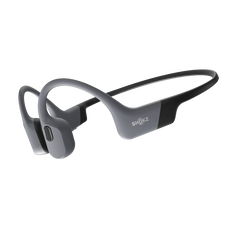
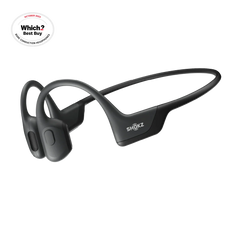
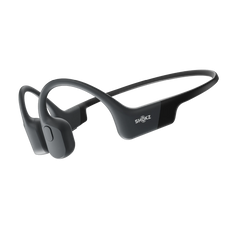
For even more security on a very active commute, the OpenRun Pro 2 uses a nickel-titanium frame and ear hooks for a snug fit that doesn't move. And for a versatile everyday option with excellent battery life, the OpenFit 2+ offers up to 48 hours of total playback, wireless charging, and open-ear comfort across any kind of journey.
Final Thoughts
The commute to work is one of those parts of the day that most people are keen to get past. But with the right earphones and good audio content, you can take control of this time. Learning, listening, calling, or simply giving yourself some quiet time before the day begins, earphones make all of it possible without adding any friction to your routine.
For commuters specifically, the best wireless earbuds for commuting are open-ear clip-on earbuds. They keep you safe on the street, comfortable across longer journeys, and connected to everything you need.

Frequently Asked Questions
What are the best headphones for commuters?
The best headphones for commuters balance comfort, awareness, and battery life. Open-ear designs are ideal as they keep you aware of your surroundings while listening. Options like OpenDots ONE offer a secure, comfortable fit for daily commuting.
Why do I feel dizzy when using noise-cancelling headphones for commuting, and what can I do?
Some people feel dizzy because noise-cancelling headphones for commuting can create ear pressure due to their sealed design and ANC. This is more noticeable when moving between walking and trains. To reduce discomfort, try lowering ANC, using one earbud, or taking breaks. Open-ear designs can also help by avoiding pressure.
How can you get the most out of the best wireless earbuds for commuting?
The best wireless earbuds for commuting can be used to stay informed with news, learn through audiobooks, take calls hands-free, or simply relax with music. Open-ear designs add extra value by letting you stay aware of announcements and traffic while listening. By matching audio use to your routine, you can turn commuting time into something more productive and enjoyable.