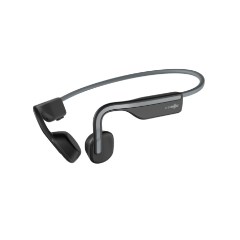
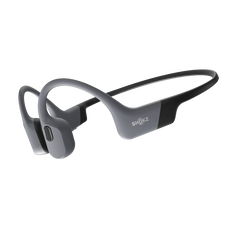


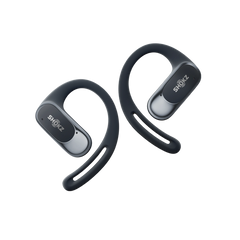
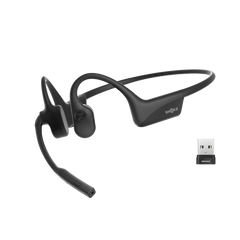
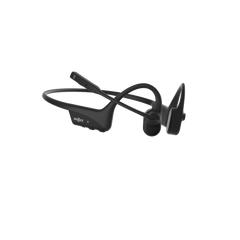

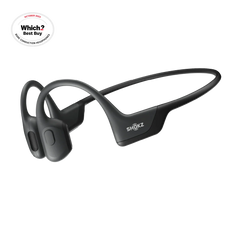
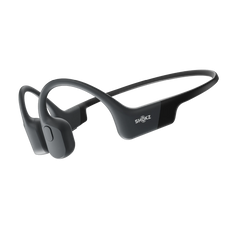

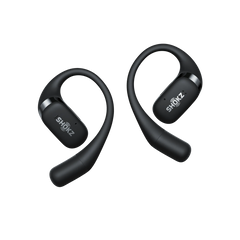


OpenFit Air 2 has just joined our open-ear lineup, sitting alongside OpenFit Air and OpenFit 2+ as our lightweight, ear-hook earbuds built for everyday comfort.
If you're deciding between OpenFit Air, OpenFit Air 2, and OpenFit 2+, the differences come down to weight, controls, battery life, connectivity, and sound. This guide walks through exactly what changes between each model so you can match the features to how you'll actually use them. Jump straight to Which One Fits Your Routine if you want the short version.
Quick Comparison Table

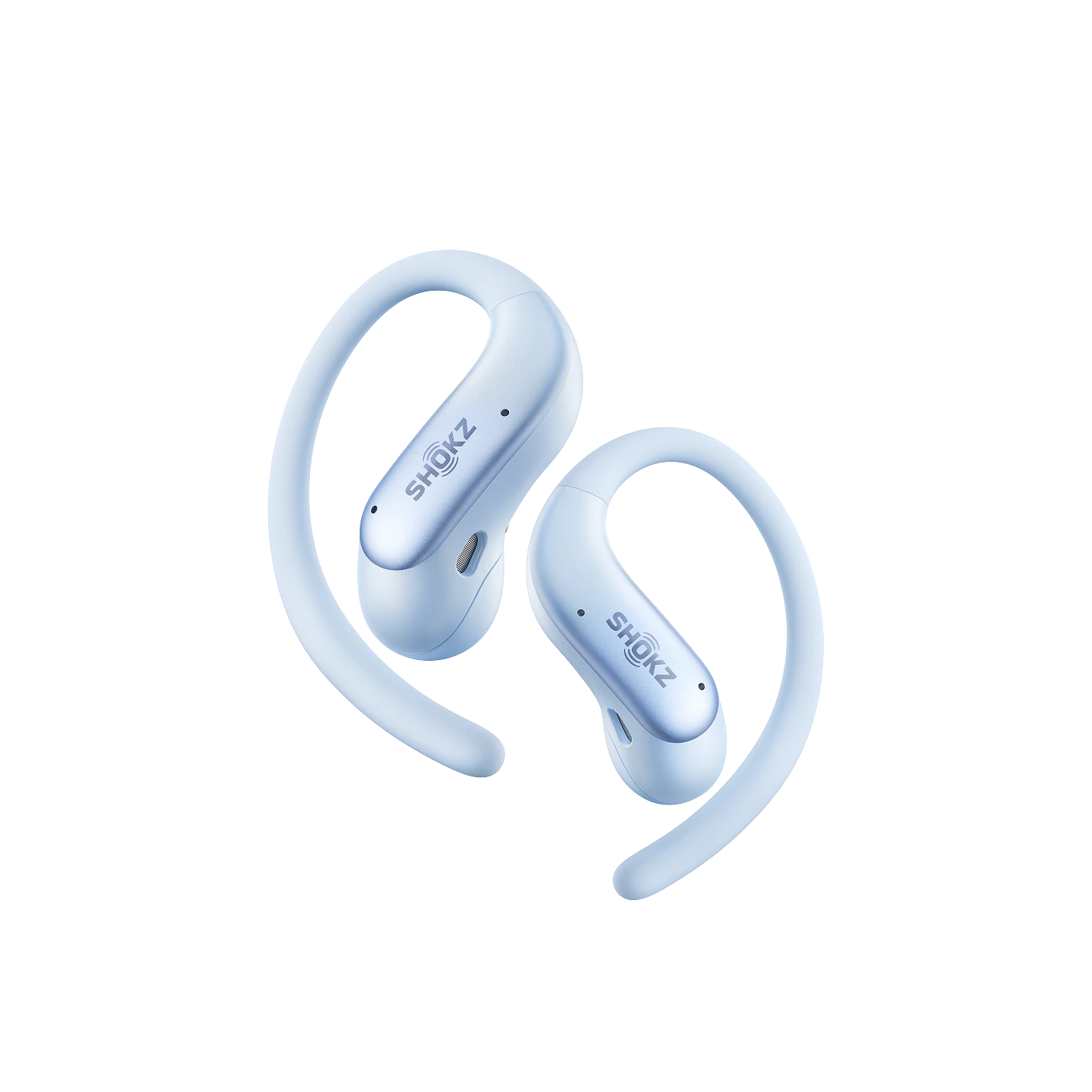
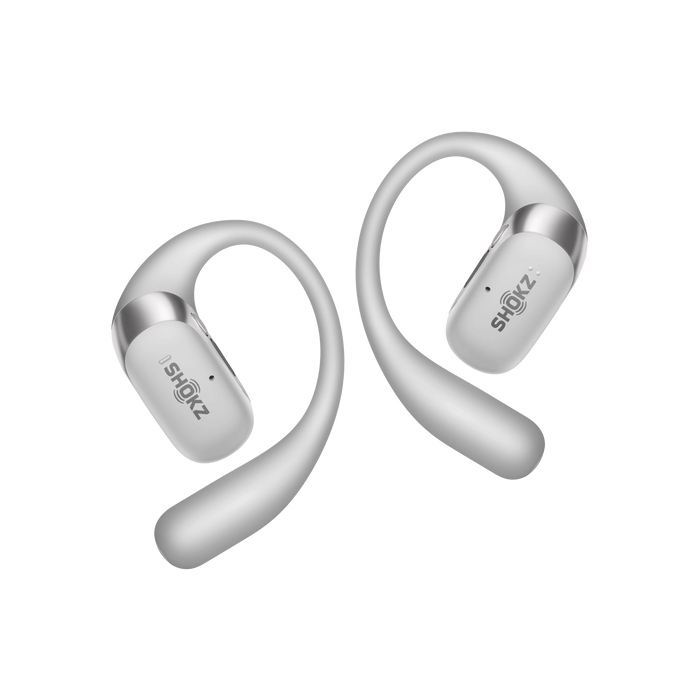
All three keep our signature open-ear design and Air-Earhook build, so none of them seal your ear canal — you'll hear your environment throughout.
OpenFit Air 2 vs OpenFit Air — The Core Comparison
Weight & All-Day Comfort
The most immediately noticeable change between the two models is weight. OpenFit Air weighs 8.7 g ± 0.2 g per earbud, while OpenFit Air 2 comes in at 7.2 g ± 0.2 g — a 1.5 g reduction per bud. Across the full system (both earbuds plus the case), that's a drop from 73.8 g ± 2.4 g to 60.8 g ± 2 g, alongside a smaller, slimmer charging case.
For short listening sessions, this difference is unlikely to register much. For all-day wear — a full workday, a long run, or back-to-back calls — the reduced weight and the firmer 0.75 mm Ni-Ti alloy ear hook (designed to flex and hold its shape against different ear sizes) may be more noticeable. How comfort actually feels still depends on your ear shape and how you wear ear-hook designs generally, so this is one to weigh against your own experience with OpenFit Air if you've used it before.

Controls: Touch vs Pressure-Sensitive Buttons
OpenFit Air uses touch controls — a capacitive surface you tap to play, pause, or skip. OpenFit Air 2 switches to pressure-sensitive buttons, which require a deliberate press rather than a tap.
The practical difference shows up during activity: touch surfaces can occasionally register accidental input from sweat, rain, or hair brushing against the earbud, while a pressure-sensitive button needs a firmer, more intentional press to trigger. Neither method is objectively "better" — it's a question of which interaction style you prefer and how sensitive your use case is to accidental triggers, such as during a sweaty workout or in wet weather.
Battery Life & Quick Charge
OpenFit Air delivers up to 6 hours of listening time on a single charge, with up to 28 hours total when paired with the charging case. A 10-minute quick charge adds roughly 2 hours of listening time.
OpenFit Air 2 extends this to up to 8 hours per charge and up to 36 hours total with the case, with the same 10-minute quick charge now yielding around 3 hours of listening time. Standby time also increases substantially — up to 1.5 days for the earbuds themselves and up to 180 days inside the case, compared with 30 days standby for OpenFit Air.
Whether the extra 2 hours per charge matters will depend on your daily listening pattern — a single workout or short commute may already sit comfortably within OpenFit Air's 6-hour window, while longer uninterrupted sessions may benefit more from OpenFit Air 2's extended runtime.
Water Resistance & Bluetooth
OpenFit Air earbuds carry an IP54 rating, while its charging case is rated as not waterproof. OpenFit Air 2 earbuds step up to IP55, and its charging case carries an IP54 rating — giving the case actual sweat and splash resistance for the first time in this line.
On connectivity, OpenFit Air uses Bluetooth 5.2, while OpenFit Air 2 moves to Bluetooth 6.1, with a stated wireless range of 33 ft (10 m) and support for multipoint pairing (connecting to two devices at once) alongside one-tap setup via Google Fast Pair™ and Microsoft Swift Pair. Both generations support the core profiles needed for everyday listening and calls (A2DP, AVRCP, HFP); the version difference mainly affects connection stability in crowded wireless environments and how consistently multi-device switching performs.
Sound Quality: How the Acoustic Systems Differ
Both earbuds combine our DRC (Dynamic Range Control) with a DirectPitch™ system, which directs sound toward your ear canal using reverse sound waves while minimising leakage in other directions — the mechanism that lets you hear music and your surroundings at the same time.
Where they differ is in the underlying acoustic technology. OpenFit Air pairs OpenBass™ Air with DRC and DirectPitch™. OpenFit Air 2 steps up to a Bassphere™ driver — two 11.8 mm high-sensitivity speakers designed to deliver output comparable to a single 16 mm driver — paired with the newer OpenBass™ 2.0 algorithm and DRC, still using DirectPitch™ for directional sound. The Shokz App also offers one custom EQ slot on OpenFit Air versus two on OpenFit Air 2, in addition to four shared preset EQ modes on both.
Which combination sounds best to you still depends on the type of music you listen to and your personal sensitivity to bass and detail in an open-ear format. Both models share the same DRC and DirectPitch™ foundation for keeping you aware of your environment; the difference is primarily in the driver hardware and bass-processing algorithm.


Where OpenFit 2+ Fits In — The Premium Alternative
If neither OpenFit Air model covers what you're looking for, OpenFit 2+ sits above both as our premium ear-hook earbud, built around a different set of priorities.
Its acoustic system uses DualBoost™ technology — two independent drivers per earbud, including a 21mm x 11mm low-frequency unit and a separate high-frequency unit — paired with OpenBass™ 2.0 and DRC. Directional sound is handled by DirectPitch™ 2.0, and among the three models compared here, OpenFit 2+ is the only one with Dolby Audio support, adding a wider, more spatial soundstage. Battery life extends further still: up to 11 hours per charge and up to 48 hours total with the case, and the charging case supports Qi wireless charging in addition to USB-C. Controls combine physical multifunction buttons with a touch panel reserved for voice-assistant activation, and the earbuds are built with Shokz Ultra-Soft Silicone™ 2.0 around the ear hook.


Which One Fits Your Routine?
Running & workout: OpenFit Air 2's lighter build, pressure-sensitive buttons, and IP55 rating suit high-movement, sweat-heavy sessions. OpenFit 2+ extends battery runtime further if you train for longer stretches without recharging.
Office & calls: Both OpenFit Air 2 and OpenFit 2+ support multipoint pairing, useful for switching between a laptop and phone through the day, alongside AI-assisted call clarity from their multi-microphone arrays.
Commuting & casual listening: OpenFit Air 2 offers up to 8 hours per charge; OpenFit 2+ extends this to up to 11 hours if your day includes longer uninterrupted stretches away from a charger.

FAQ
What's the difference between OpenFit Air 2 and OpenFit Air?
OpenFit Air 2 steps up from OpenBass™ Air to Bassphere™ + OpenBass™ 2.0, extends single-charge listening time from 6 to 8 hours, reduces earbud weight from 8.7 g to 7.2 g, switches from touch controls to pressure-sensitive buttons, upgrades water resistance from IP54 to IP55 (with an IP54-rated case).
What's the difference between OpenFit Air 2 and OpenFit 2+?
OpenFit 2+ uses a DualBoost™ dual-driver system with DirectPitch™ 2.0 and Dolby Audio support, offers longer battery life (up to 11 hours per charge, 48 hours with the case), and supports Qi wireless charging. It is heavier per earbud (9.4 g vs 7.2 g), runs on Bluetooth 5.4 rather than 6.1.
Is OpenFit Air 2 waterproof?
OpenFit Air 2 earbuds are rated IP55 for sweat and water splash resistance, and the charging case is rated IP54. Neither is rated for submersion or swimming.
How long does the OpenFit Air 2 battery last?
Up to 8 hours of listening time on a single charge, and up to 36 hours total with the charging case. A 10-minute quick charge provides roughly 3 hours of additional listening time.