


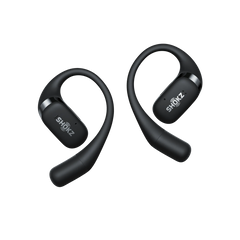


- Why Are People Ditching Regular Headphones for Bone Conduction?
- What Exactly Is Bone Conduction?
- The Mechanics: How the Headphones Actually Work
- Bone Conduction vs Traditional Headphones: The Key Differences
- How Shokz Has Engineered Bone Conduction to Sound This Good
- Which Shokz Model Suits How You Train?
Why Are People Ditching Regular Headphones for Bone Conduction?
Think about your usual commute: cycling to work with one eye on the traffic, or walking to the station while trying to hear the platform announcements over your podcast. Or perhaps you're at the gym, wanting music without losing track of what's going on around you.
If any of that sounds familiar, you've likely come across bone conduction headphones and wondered how on earth they play sound without going anywhere near your ear canal. It looks like a bit of a trick — audio, seemingly out of nowhere, with nothing sitting in or over your ears.
There's no trick involved. It's simply physics, and one that's been around far longer than most people realise. In this guide, we'll explain exactly how bone conduction headphones work, how they compare with standard earbuds and over-ear headphones, and how Shokz has spent years refining the technology to overcome its trickiest limitations — plus which of our models suits your training, whether that's on land or in the pool.
What Exactly Is Bone Conduction?
To get your head around bone conduction, it helps to first think about how ordinary hearing works.
With standard hearing — and with conventional headphones — sound travels as waves through the air, enters your ear canal, and makes your eardrum vibrate. Those vibrations then pass to your inner ear (the cochlea), which turns them into signals your brain reads as sound.
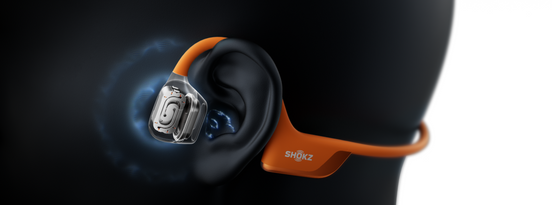
Bone conduction removes that middle step altogether. Rather than sound waves travelling through the air and striking your eardrum, small transducers send precise vibrations directly through your cheekbones and skull, straight to the cochlea. Your eardrum is barely involved in the process.

Here's the surprising bit: this isn't a recent invention dreamt up purely for sports headphones. Bone conduction has featured in hearing aid technology for decades, and it's said that Beethoven, as his hearing failed, would clench a rod between his teeth and rest the other end against his piano to feel the vibrations of the notes he played. Different context, same underlying principle — sound reaching the inner ear without ever passing through the air or the eardrum.
The Mechanics: How the Headphones Actually Work
Once you understand the underlying science, what happens inside the headphones themselves is fairly simple. Here's the process each time you put on a pair and press play:
-
Positioning. The transducers rest lightly on your cheekbones, just in front of your ears — never inside them, never over them.
-
Converting the signal. The headphones turn your audio — music, calls, podcasts — into small, precise vibrations.
-
Travelling through bone. Those vibrations pass through your cheekbones and skull straight to the cochlea in your inner ear.
-
Your brain interprets it. The cochlea reads the vibrations just as it would any other sound signal, and your brain processes them as speech or music — all while your ear canal remains completely open throughout.
That final point is really the whole appeal of bone conduction. You get your audio without losing touch with the world around you — footsteps behind you, a car indicating, a colleague asking a question, or a lifeguard's whistle across the pool.
Bone Conduction vs Traditional Headphones: The Key Differences
If you're used to in-ear buds or over-ear headphones, bone conduction feels like a genuinely different category — not just a different shape strapped to your head. Here's a side-by-side comparison:
That last row deserves a closer look, because it's the honest compromise bone conduction has always had to grapple with. Early bone conduction headphones were known for thin, tinny audio and noticeable vibration — simply because bone doesn't carry low frequencies as efficiently as air does. It's a genuine limitation rooted in physics, and one Shokz has spent years engineering around.
How Shokz Has Engineered Bone Conduction to Sound This Good
Understanding the theory behind bone conduction is one thing. Making it sound genuinely good — with proper bass, minimal vibration, and reduced sound leakage — is an entirely different engineering challenge. When we first entered this category, there was no existing playbook to follow. Over more than two decades of research, we've developed a family of bone conduction acoustic technologies, each tackling a different part of the puzzle: better sound quality, reduced leakage, less vibration, and lower power consumption.
Here's a closer look at the technologies behind that progress.
DualPitch™ — Two Drivers Working in Tandem
Instead of relying on bone conduction alone, DualPitch™ combines two independent drivers, each doing a specific job:
-
The bone conduction driver handles mid-to-high frequencies with precision, keeping vocals and instrumentals clear.
-
The air conduction driver takes care of the bass, delivering a richer, more textured low end with minimal vibration.
By dividing the work this way, DualPitch™ directly addresses the "thin sound" bone conduction has long been criticised for, giving you a fuller, more balanced listening experience — without sacrificing the open-ear design that makes the category worth choosing in the first place.

TurboPitch™ — Engineered for Deeper Bass
TurboPitch™ tackles the bass question from a different angle. It builds a "CoreCushion" into the low-frequency vibration system — a concept borrowed from the diaphragm used in traditional speakers, which is central to producing punchy, powerful bass. The result is a new way for low frequencies to resonate through an open-ear design, aimed at delivering noticeably more satisfying bass.

PremiumPitch™ — Our Original Platform, Refined Over Generations
PremiumPitch™ represents the earlier stages of our bone conduction development, refined across several generations:
-
PremiumPitch™ 1.0 to 1.0+ — Structural refinements to the bone conduction transducer widened the frequency response range, improving overall sound quality.
-
PremiumPitch™ 2.0 — An integrated sound system housing all components in a single enclosure, delivering more balanced, detailed sound with reduced leakage and improved waterproofing.
-
PremiumPitch™ 2.0+ — The transducer is angled at 30°, which significantly cuts vibration for a noticeably more comfortable, immersive listening experience.

Built to Stay Comfortable
None of this matters much if the headphones aren't comfortable enough to wear for a full session. Across our range, we use ergonomic ear hooks and stable frame designs, paired with materials such as nickel-titanium alloy, engineered to deliver a secure, all-day fit without ever feeling like it's clamping your head.

Which Shokz Model Suits How You Train?
Once you understand the technology, the natural next question is: which pair actually fits your routine? Here are two of our models, built for two very different environments.
OpenRun Pro 2 — For Running, Cycling and Everyday Training
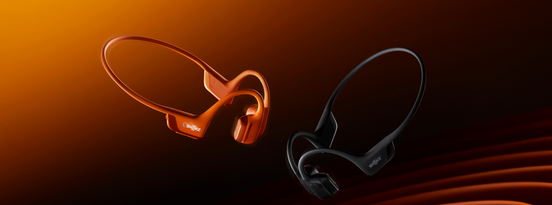
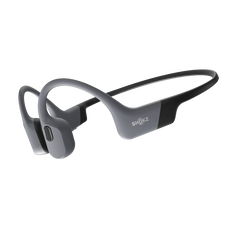
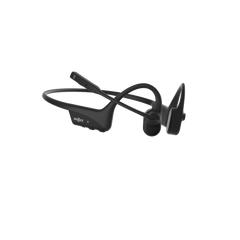
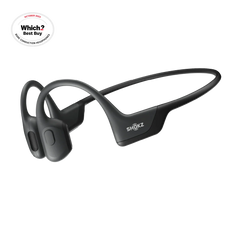
If most of your activity happens on land — pavements, trails, the gym, or your daily commute — the OpenRun Pro 2 is our flagship choice. It's built around DualPitch™ technology, giving you fuller sound with proper bass instead of the thin, tinny audio bone conduction was once known for.
For anyone who wants to stay fully aware of traffic and their surroundings while still getting genuinely enjoyable audio, this is the model built specifically for that balance.


OpenSwim Pro — For Swimming and Water-Based Training
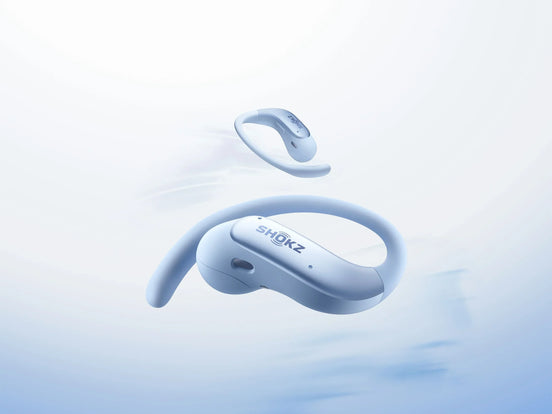
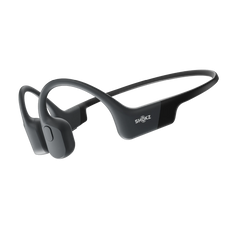
Swimming presents an entirely different set of demands, and it's where bone conduction really proves its worth. There's no wrestling with waterlogged earbuds or a wired connection tangling mid-length — the transducers sit against your cheekbones, your ears stay open (handy for hearing a coach or lifeguard), and the whole unit is built to be fully submersible.
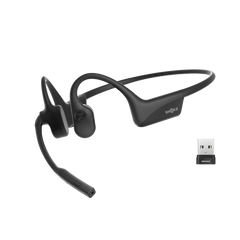
The OpenSwim Pro runs on our PremiumPitch™ 2.0+, our 8th-generation bone conduction technology, designed to reduce vibration and sound leakage while improving audio quality compared with the 7th-generation tech used in the original OpenSwim.


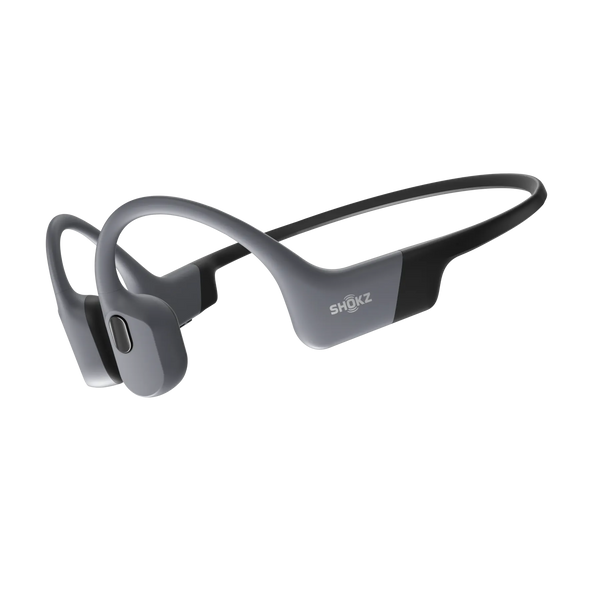
If your training involves real time in the water, this is the model built around that reality from day one — not water resistance bolted on as an afterthought.
Ready to Hear the Difference?
Bone conduction isn't a gimmick — it's a genuinely different way of listening, one that keeps you connected to what's happening around you while you train, commute, or swim laps. And while the technology has always come with real trade-offs, particularly around bass and vibration, that's precisely what Shokz has spent its engineering effort solving with technologies like DualPitch™ and PremiumPitch™.
Whether you're clocking up miles on the road or lengths in the pool, there's a model built around how you actually train.
Explore the OpenRun Pro 2 and OpenSwim Pro on our website to find the pair that fits your next session — and hear what open-ear listening is really like.
FAQ
Do bone conduction headphones actually work, or is it a gimmick?
They genuinely work — it's the same underlying principle used in hearing aids for decades. Small transducers send vibrations through your cheekbones directly to the cochlea, bypassing the eardrum entirely, so you hear real audio without anything sitting in or over your ears.
Why did older bone conduction headphones sound thin or tinny?
Bone simply doesn't carry low frequencies as efficiently as air does, so early models struggled to reproduce rich bass. That's exactly what technologies like DualPitch™ and TurboPitch™ were engineered to solve, using dedicated drivers and vibration systems to fill in the bass without losing the open-ear design.
Are bone conduction headphones waterproof enough for swimming?
It depends on the model. Something like the OpenSwim Pro is purpose-built for full submersion, using our PremiumPitch™ 2.0+ technology, whereas everyday models such as the OpenRun Pro 2 are designed for land-based training and everyday wear rather than swimming.
Do bone conduction headphones feel different to wear than regular headphones?
Yes — noticeably. Since they rest on your cheekbones rather than in or over your ears, there's no in-ear pressure or ear-canal irritation, which many people find more comfortable during long sessions.