





Walking is the exercise hiding in plain sight. There’s nothing to learn, no memberships to subscribe to or serious kit to buy. Yet, done at the right pace, it delivers many of the benefits people join gyms for.
The pace really matters. A gentle amble is lovely, but it is brisk walking, the kind that warms you up and works your heart, that turns a stroll into something your body counts as exercise.
Read on to learn all about brisk walking, the benefits it brings, simple ways to get more from every walk, and the small amount of gear that helps, headphones included.
What Counts as Brisk Walking?
Brisk walking generally means walking at around three miles an hour, which is faster than a stroll but comfortably short of a jog. Simply put, at a brisk pace you can still hold a conversation, but you would struggle to sing.
The NHS classes brisk walking as moderate intensity exercise, in the same category as cycling on the flat. Adults are advised to build up 150 minutes of moderate activity a week, and short brisk walks are one of the most realistic ways to get there. The free NHS Active 10 app exists to track exactly that.
Speed is relative, though. If you are new to exercise, brisk simply means whatever raises your heart rate and breathing while still feeling sustainable. Your brisk pace next year will be quicker than this year’s, and that is rather the point.

The Benefits of Brisk Walking
The brisk walking benefits list is long, and well supported for something so simple:
- A stronger heart: Regular brisk walking raises your heart rate into the zone where cardiovascular fitness improves, helping to support healthy blood pressure and circulation over time.
- Easier weight management: A brisk half hour burns meaningfully more calories than a slow one, and because it is easy to recover from, you can do it daily without dreading it.
- A lift in mood: Fresh air, daylight, and rhythmic movement are a reliable combination for clearing your head. Many people find a brisk lunchtime walk does more for the afternoon than a coffee.
- Kind to your joints: Walking is low impact, so it builds fitness without the pounding that puts some people off running. It is also a sensible way back into exercise after a break or an injury.
- Better sleep and energy: Regular walkers tend to report sleeping better and feeling more energetic, particularly when walks happen outdoors in daylight.
None of this requires heroic distances. What you need is consistency. A brisk 20 to 30 minutes most days beats an occasional exhausting trek.
Brisk Walking Tips to Get More from Every Walk
- Sort your posture: Walk tall, look ahead, not at your feet, relax your shoulders, and let your arms swing naturally. A compact arm swing adds pace on its own.
- Use intervals: Alternate a few minutes at your normal pace with a few minutes pushing harder. This is why lamppost-to-lamppost efforts are so popular.
- Add hills: A route with a climb or two raises the intensity without needing extra speed. Your calves will feel it at first, then adapt.
- Make it a fixture: Attach walks to things that already happen: the commute, the school run, a lunchtime loop, the dog’s evening outing. This is how your walks survive busy weeks, when they have fixed slots during the day.
- Track something: Steps, minutes, or route distance all work. Watching your usual loop get quicker is quietly addictive.
Brisk Walking Essentials: What to Wear and Bring
One of walking’s charms is how little it demands, but a few brisk walking essentials make quicker walks more comfortable:
- Supportive trainers: Cushioned running or walking trainers beat flat casual shoes once your pace rises. Your knees will notice the difference before you do.
- Layers that breathe: A brisk pace warms you up quickly. Light, breathable layers with a packable waterproof suit the UK’s changeable skies far better than one heavy coat.
- Visibility for darker months: Many daily walks happen at dusk from autumn onwards, so you need reflective details or a small light.
- Water for longer walks: Anything under 45 minutes rarely needs it. Past that, a small bottle can be a great addition.
- Audio that keeps you aware: For many walkers, headphones for brisk walking are the difference between a chore and the best half hour of the day. The open-ear kind keeps you safe while you do it.

Choosing Headphones for Brisk Walking
People take brisk walks on pavements, park paths, and road crossings, which is why sealed, noise-isolating earbuds are the wrong tool. You want music alongside your surroundings, not instead of them. That is exactly what open-ear headphones are for. They leave the ear canal open, so traffic, bike bells, and greetings reach you as normal.
Two Shokz models stand out for walkers.
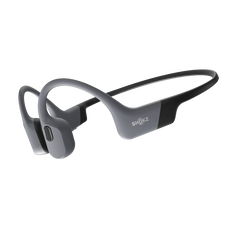
Shokz OpenRun Pro 2: For Walkers Who Push the Pace
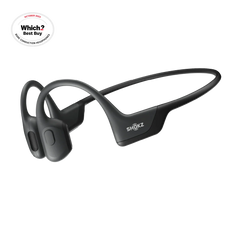
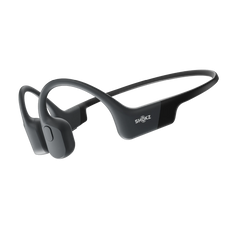
The Shokz OpenRun Pro 2 comes from the sports side of the range and suits walkers who treat the daily loop as a workout. Bone conduction sends sound through your cheekbones, DualPitch™ technology adds a dedicated bass speaker for a fuller sound, and the 30.3g wraparound frame will not budge however hard your arms pump.
Key features:
- Ears stay fully open to traffic and surroundings
- DualPitch bone conduction plus air conduction bass driver
- Up to 12 hours of playback per charge
- 5-minute quick charge adds around 2.5 hours
- IP55 rating shrugs off sweat and rain
- Lightweight 30.3g wraparound fit that never bounces
- Bluetooth 5.3 with multipoint pairing


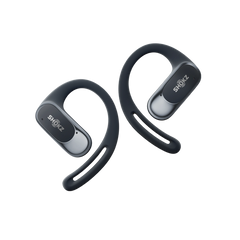
Shokz OpenFit Air: For Everyday Walks and Everything After
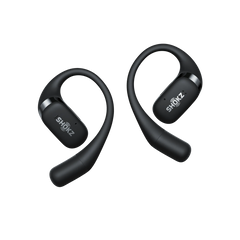
The Shokz OpenFit Air is the more casual pick. It’s a pair of true wireless open-ear earbuds with soft, flexible hooks that sit lightly around each ear. At 8.7g per bud, they all but disappear on a walk, and they are just as useful on calls at your desk afterwards, with a four-mic system handling your voice.
You get six hours per charge, 28 hours with the case, and DirectPitch™ technology to keep your podcast from reaching the rest of the bus stop. At £94, it is a very accessible way into open-ear listening.
Key features:
- Open-ear design with a soft, flexible ear hook fit
- 8.7g per earbud for barely-there comfort
- Up to 6 hours per charge, 28 hours with the case
- 10-minute quick charge adds around 2 hours
- DirectPitch technology reduces sound leakage
- IP54 sweat and splash resistance
- Bluetooth 5.2 with multipoint pairing


Final Thoughts
Brisk walking is the rare piece of health advice that is easy to actually follow. It needs no equipment, fits into the day you already have, and pays you back in fitness, mood, and sleep.
Start with posture and pace, let the routine settle, and add the small comforts that keep you heading out the door: decent trainers, a packable waterproof, and a pair of open-ear headphones such as the OpenFit Air for company. The miles take care of the rest.
Frequently Asked Questions
How fast is brisk walking?
Around three miles an hour for most people, or roughly 100 steps a minute. The simplest check is the talk test. You should be able to chat comfortably but not sing. If you can sing, speed up. If you cannot talk, ease off.
Is brisk walking enough exercise on its own?
For general health, yes. Brisk walking counts towards the recommended 150 minutes of moderate weekly activity, and doing it consistently supports heart health, mood, and weight management. Adding a couple of strength sessions each week rounds things out, but as a foundation, brisk daily walks are excellent.
What are the main benefits of brisk walking every day?
Daily brisk walking supports your heart and circulation, helps manage weight, lifts your mood, and tends to improve sleep. Because it is low impact, it is also sustainable in a way harder exercise often is not, which is why the benefits keep stacking up over months and years.
Are open-ear headphones good for brisk walking?
Yes, they are arguably the ideal type. Open-ear designs keep your hearing clear for traffic and other people while you enjoy music or podcasts, and sports-focused models stay secure at a fast pace. That mix of awareness and comfort is why so many walkers are moving away from sealed earbuds.