




-
What Are Clip-On Earbuds?
-
What Are Bone Conduction Headphones?
-
Clip-On vs Bone Conduction: Key Differences
-
Shokz OpenDots ONE vs OpenRun Pro 2
-
Which One Should You Choose?
-
Frequently Asked Questions
Two of our most talked-about headphone styles work in fundamentally different ways. Clip-on earbuds grip the outer edge of your ear. Bone conduction headphones rest against your cheekbones and transmit sound through the bones of your skull. Both leave your ears completely uncovered, and both keep you aware of your surroundings, but from there, the experience of wearing them, what they sound like, and what they're best at are quite different things.
Let’s look at how each style works, what separates them in real-world use, and which of our products makes more sense depending on how you spend your days.
What Are Clip-On Earbuds?
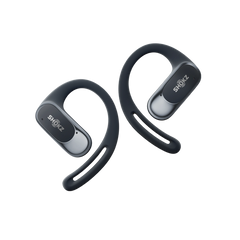
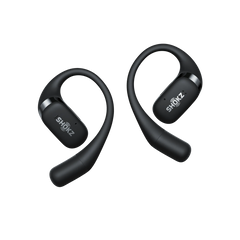
A clip-on earbud clamps to your auricle, the curved structure on the outside of your ear. The speaker module is positioned right at the opening of the ear canal, but stops there, with a small flexible arm holding it in place by gripping the outer ridge.
Our OpenDots ONE uses a JointArc™ mechanism built from a titanium alloy plate with a soft silicone surface. It wraps around the ear and adapts to its shape rather than clamping against it.


What Makes Clip-On Earbuds Good for Everyday Use
The practical case for clip-on earbuds is mostly about sustained comfort. When nothing enters your ear canal, there's no seal to maintain, no pressure building up, and no ear fatigue creeping in after a few hours. That makes them well-suited to long workdays, commutes, or any situation where you'll be wearing them for most of the day.
They're also a strong option for glasses wearers, since nothing loops behind the ear to take the space your glasses should be sitting on. The compact profile of a clip-on earbud tends to read more like an accessory than a piece of audio kit, which makes them feel at home in office and professional settings.
What Are Bone Conduction Headphones?
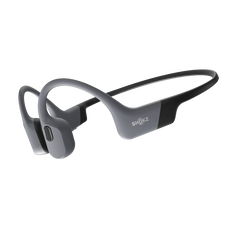
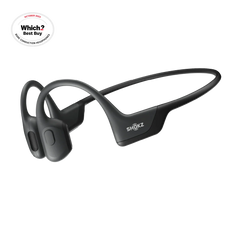
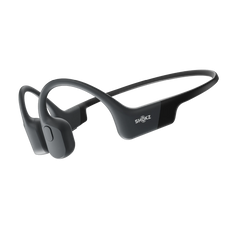
Bone conduction headphones get sound to your inner ear without using the ear canal at all. The transducers on the frame vibrate against the facial bones just in front of your ears, sending those vibrations along your skull directly to the cochlea, where they're processed as sound. Your eardrum plays no part in the process.
The audio feels as though it's coming from around you, and because nothing covers or enters your ears, all ambient sound around you remains fully audible.
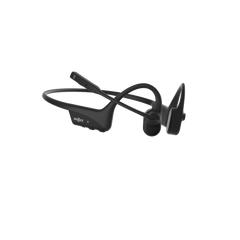
Our builds on standard bone conduction with DualPitch™ technology, a dual-driver system that pairs a bone conduction unit handling mids and highs with a separate air conduction speaker dedicated to producing deep, controlled bass. Traditional bone conduction headphones have often fallen short on low frequencies, and this setup addresses that directly.
What Makes Bone Conduction Headphones Good for Sports
Because a bone conduction frame anchors to your skull rather than relying on your ear for support, it holds its position far more consistently during vigorous movement. The nickel-titanium alloy frame of the OpenRun Pro 2 is flexible enough to fit different head sizes but springy enough to maintain steady contact with your cheekbones through sprints, direction changes, and whatever else a training session throws at it.
The completely open-ear positioning is also worth noting for safety. You stay fully aware of your surroundings, traffic, other people on a trail, and sounds from the other road you're approaching, without needing to lower your volume or take anything out.
Clip-On vs Bone Conduction: Key Differences
When weighing up clip-on vs bone conduction, the differences that matter most in practice are fit, sound, and what you'll actually be doing while you wear them.
● Fit and stability: Clip-on earbuds grip the outer ear and handle everyday movement well. Bone conduction headphones lock around the skull and perform more consistently during high-intensity activity. For running intervals or cycling on a road, the wraparound frame has more to anchor against.
● Sound: Clip-on earbuds use conventional drivers and can produce real bass depth and a wide soundstage, especially with technology like the Bassphere™ dual drivers and DirectPitch™ system in the OpenDots ONE, which focuses audio towards the ear canal. Bone conduction headphones have traditionally struggled with bass, though the DualPitch™ setup in the OpenRun Pro 2 narrows that gap considerably.
● Portability: The smaller build of clip-on earbuds and their compact charging cases make them easier to carry in a small bag or pocket. The OpenRun Pro 2 frame is around 30g, but it won't slip into your jeans pocket.
● Awareness: Both styles keep your ears fully open, so both give you the same situational awareness during use. That's a key part of what makes open-ear audio worth exploring, regardless of which category you go for.
Shokz OpenDots ONE vs OpenRun Pro 2
The OpenDots ONE is our flagship clip-on open-ear earbud; the is our flagship bone conduction sports headphone. Here's a closer look at both.
Overview of the OpenDots ONE
The OpenDots ONE was designed around long-term wearability and impressive sound quality in an unusually small package.
The JointArc™ fit holds it securely without clamping down, and the interchangeable design removes any guesswork about which earbud goes where. Sound comes from two 11.8mm Bassphere™ drivers that produce richer bass than you'd expect from an earbud this size. Enable Dolby Audio through the Shokz App for a more immersive soundstage, and choose from four EQ presets to suit what you're listening to. DirectPitch™ keeps audio directed towards your ear canal rather than leaking outward, so it stays between you and your earbuds.

Battery life runs to 10 hours per charge, with up to 40 hours total from the wireless charging case. It has an IP54 rating, which covers sweat and light rain and a multipoint pairing that connects to two devices at the same time. The call quality is great with AI-enhanced microphones that handle noisier environments.
Overview of the OpenRun Pro 2
The OpenRun Pro 2 is built around sporting performance, with no corners cut on durability or sound.
DualPitch™ technology combines bone conduction for precise mids and highs with a separate air conduction driver for deep, controlled bass, a meaningful step up from what single-driver bone conduction headphones can do. The nickel-titanium frame weighs around 30g and holds its position through intense training, with ergonomic ear hooks and a streamlined band that spreads contact pressure evenly across the skull.
Battery life gives around 12 hours per charge. IP55 takes care of sweat and rain during outdoor training, and the AI noise-cancelling microphones keep calls clear.

Which One Should You Choose?
For anyone in search of the best earbuds for commuting and everyday wear, the OpenDots ONE is the more practical fit. It's light, low-profile, and comfortable enough to keep in from the morning commute through to the end of the working day without thinking about it. The wireless charging case makes topping up straightforward, and multipoint pairing between your phone and laptop removes a lot of the small daily friction.
For regular runners, cyclists, and anyone training multiple times a week, the OpenRun Pro 2 is the more purpose-built option. The bone conduction frame stays put through high-intensity movement in a way that clip-on earbuds simply aren't designed to match, and the 12-hour battery with Quick Charge keeps up with longer training days. If you're after the best earbuds for all-day wear across a full and active schedule, the OpenRun Pro 2 has the build for it.
Frequently Asked Questions
Is clip-on or bone conduction better for commuting?
For most commuters, clip-on earbuds are the more comfortable and convenient option. They're compact, easy to carry, and suit the stop-start rhythm of commuting well. You can hold a quick conversation or hear a station announcement without removing anything. The OpenDots ONE handles this particularly well, with multipoint pairing keeping it connected to your phone and laptop at the same time.
Can you wear bone conduction headphones all day?
Yes, and many people do. The wraparound frame sits against the skull without touching the ear canal, which many find more comfortable over long sessions than in-ear designs. The OpenRun Pro 2's 12-hour battery holds up through a full day of use, though some people notice the frame after several hours of continuous, sedentary wear. It tends to be the more comfortable choice for active days than for long desk sessions.
Which is more comfortable for long wear, clip-on or bone conduction?
For extended, lower-intensity wear, clip-on earbuds generally come out ahead. Nothing presses into the ear canal, so there's no seal to maintain and no pressure accumulating over time. The OpenDots ONE at 6.5g per earbud is light enough that many people genuinely stop noticing it's there after the first hour or so.
Are clip-on earbuds safe to use outdoors?
Yes, open-ear designs of all kinds are among the safer choices for outdoor use precisely because the ear canal stays open. You hear everything around you naturally: traffic, other people, changes in your environment, all without needing to adjust volume or remove your earbuds. That real-time awareness is one of the main reasons open-ear styles have become popular with runners and cyclists who want to stay safe while they listen.