


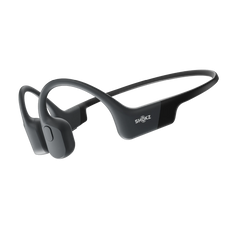

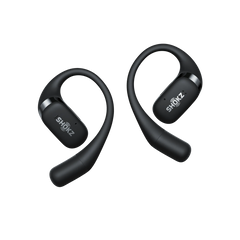


Choosing between ear hook earbuds vs over-ear headphones sounds simple. One wraps around your ear, the other covers it. But anyone who has used both will know that they suit different purposes. One gives you stability when you move, while the other gives you an immersive listening experience.
One style is not inherently better than the other, as they both have their strong and weak points. The choice depends on the purpose you need the earphones for and which trade-offs you can live with.
We’ll compare both options in this guide, based on comfort, weight, portability, stability, awareness, and calls. Then we’ll cover common situations to help you decide which fits your routine.
What Are Ear Hook Earbuds?

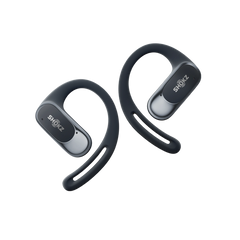
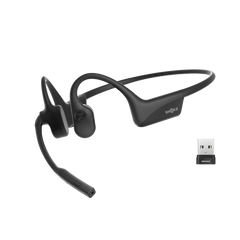
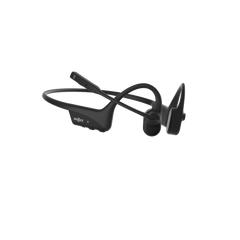
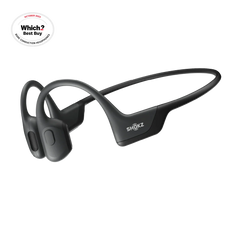
Ear hook earbuds are wireless earbuds with a curved hook that loops behind your outer ear. Most modern designs, including the Shokz OpenFit range, are open-ear earbuds that leave your ear canal open. The speaker is typically outside the ear canal, which leaves your ears open to everything happening around you.
The hook spreads the earbud's weight around the ear instead of wedging it in the canal, and it anchors everything so securely that the earbuds stay put when you move your head. The Shokz OpenFit Prouses a nickel-titanium hook and Ultra-Soft Silicone™ 2.0 and weighs 12.3g per earbud, while the Shokz OpenFit 2+ weighs just 9.4g.
There are trade-offs to consider with this earbud style. It let ambient noise in, produces lighter bass than over-ear headphones, and at high volume a little sound can leak out, although there are technologies like DirectPitch™ specifically to keep that in check.
What Are Over-Ear Headphones?
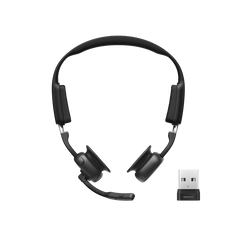
Over-ear headphones cover the whole ear with cushioned cups joined by a headband. It's the oldest style still in mainstream use, and it’s still in use because nothing else sounds quite like it.
Large cups leave room for large drivers, so over-ear models generally produce the fullest sound of any headphone format, with deep bass that earbuds have to work hard to achieve. They block out a lot of noise naturally because of the sealed fit, and premium pairs often add active noise cancellation on top of that. That isolation is the main selling point in situations like a long flight or a noisy open-plan office.
The weaknesses to consider here are mostly physical. Popular over-ear models weigh around 250g or more. They clamp gently against your head to hold their seal, and they warm your ears up quickly, which can be pleasant in January and rather less so on a packed summer train. They also can’t fit into a pocket, so you’ll always need a bag, and they often have no protection from sweat or rain.
Ear Hook Earbuds vs Over-Ear Headphones: Key Differences
Here's how the two designs compare at a glance:


Comfort and weight
Over-ear comfort depends on clamping force and pad quality, and even a good pair becomes noticeable after a few hours of use. Ear hook earbuds weigh between 8.7g and 12.3g per side across the Shokz range, with no pressure on the ear canal and nothing squeezing your head. They are also more comfortable for people who wear glasses.
Portability
Earbuds win this one without trying. The charging case is pocket-sized and recharges the buds several times over, giving a pair like the OpenFit 2+ up to 48 hours of total listening before you need a cable. Over-ears fold, at best, into a case the size of a lunchbox.
Stability during movement
A pair of ear hook earbuds stays put through running, jumping, and burpees without any problem. Over-ear headphones stay reasonably stable while you're upright and still, but they start to slide when you look down at a laptop or go for a jog. The sealed pads also trap heat and moisture against your skin during anything sweatier than a walk.
Environmental awareness
Open-ear designs keep you connected to your surroundings. You stay alert during traffic, station announcements, a colleague saying your name, the doorbell, and more. Over-ears do the opposite job, and when you turn on noise cancellation, they remove you from the room almost entirely. Using transparency modes can allow the outside world back in through microphones, but it never sounds as natural as ears that were open all along.
Long listening sessions
Heat, clamping pressure, and ear canal fatigue are the three things that cut long headphone sessions short. Ear hook designs avoid all three, which is why open-ear models have become the default for all-day wear. Keeping the volume moderate with open ears is also kinder to your hearing over a full day than sealed listening at high volume.
Call quality
Both formats can handle calls well, but earbuds put the microphones closer to your mouth. The OpenFit Pro uses a triple-mic array with AI noise reduction that filters up to 99.4% of background noise, and because your own voice reaches your ears naturally, you're less likely to shout on a busy street. Over-ear mics are fine indoors, but many of them struggle in wind and traffic.


Which Design Fits Your Day?
Specs only get you so far. Let’s see which style actually fits specific users:
Commuting
Ear hook earbuds suit commuters who walk, cycle, or take trains. You hear announcements and traffic, the case slips into a pocket, and a quick top-up in the case covers the journey home. There's a reason open designs dominate lists of the best commuter earbuds. Over-ears suit long, seated journeys where you'd rather hear less of the carriage and there's room in your bag.
Working
In a loud open-plan office, over-ears with noise cancellation remain the best focus tool there is. But they often fail if your day involves meetings, calls, and colleagues who need to reach you. Open-ear headphones for the workplace let you stay part of the room, and the OpenFit 2+ runs up to 11 hours on a single charge with four AI noise-cancelling mics for calls.
Exercising
Earbuds with ear hooks hold firm through intervals and hill sprints. They are often IP54 and IP55 rated, enough to shrug off sweat and rain. And open-ear models keep you aware of cars, bikes, and other runners. This is exactly why open-ear headphones for sports exist, because over-ears slide, overheat, and soak up sweat the moment training gets serious.
Relaxing at home
Over-ears are great for evenings on the sofa when there’s nobody you need to listen for. They make your films, albums and games sound rich and enveloping. Ear hook earbuds can still be used at home, like when listening to podcasts while cooking, or an audiobook while pottering. They allow you to hear the timer, the kids, or the kettle over the top.
Final Verdict
There's no single winner in the earbuds vs over-ear headphones debate, only a right answer for your week.
Choose over-ear headphones if you mostly listen in one place, want maximum isolation and the deepest possible sound, and don't mind the bulk.
Choose ear hook earbuds if your listening happens on the move, you need to stay aware of your surroundings, or you want something comfortable enough to forget you're wearing them all day. In that camp, the OpenFit Pro is the strongest all-rounder, with sound quality that makes the open-ear trade-off feel far smaller than it used to be.
Frequently Asked Questions
Are earbuds better than over-ear headphones?
Neither is outright better. Over-ear headphones deliver stronger isolation and deeper bass, while earbuds are lighter, more portable, and easier to wear for long stretches. Ear hook earbuds also offer a secure fit and open-ear awareness, which makes them the stronger choice for exercise, commuting, and all-day wear.
Are open-ear earbuds better than headphones for exercise?
For most workouts, yes. In the open-ear earbuds vs headphones debate, exercise is the clearest win for the earbuds. The hook stays put through fast movement, IP54 and IP55 ratings resist sweat, and you can hear traffic on outdoor runs. Over-ears slide when you move quickly, and few tolerate sweat well.
Can you wear ear hook earbuds with glasses?
Yes. The hook is slim enough to sit alongside a glasses arm, and most wearers find it comfortable after a small adjustment. Put your glasses on first, then rotate the earbud into place so the hook settles naturally beside the frame.
Do over-ear headphones sound better than ear hook earbuds?
Sealed cups still produce the deepest bass and the most immersive soundstage. The gap has narrowed, though, because systems like the OpenFit Pro's SuperBoost™ driver with Dolby Atmos bring open-ear sound closer to full-size headphones than it has ever been.