


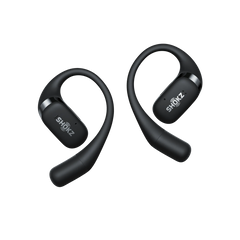


Every gym goer knows that their headphones determine whether or not they have a great workout experience. Bad workout headphones fall out, mess with your spatial awareness, or give up the ghost the moment you start sweating. Good ones stay put, feel like they're barely there, and withstand all the sweat that comes with your sessions.
This guide covers what to look for in the best workout headphones, our top five picks for 2026, and a few tips to help you find the right match for how you train.
What to Look Out for in Top-Rated Headphones for Working Out
These are the features you need in your workout headphones:
Secure Fit & Comfort
For active use, fit is everything. Look for designs with ear hooks, ear fins, or secure wraparound frames that hold their position during movement. Bone conduction headphones rest just above the ears entirely, which makes them a great option for many athletes. Comfort matters just as much, especially for longer sessions. Anything that pinches, creates pressure, or causes ear fatigue is going to be a problem.
Sweat and Water Resistance
This one is non-negotiable for workout headphones. You need at least an IPX4 rating to handle sweat and light splashes. That's the baseline. Models with IP55 or IP68 ratings are even better, handling heavier moisture and, in some cases, full submersion. If swimming or outdoor training in wet conditions is part of your routine, a higher IP rating is worth prioritising. Do check that the charging case has some water resistance too, as this is easy to overlook.
Stability
A pair of headphones might feel comfortable and still shift around when you accelerate, change direction, or crouch. For high-intensity training and running, you want something that stays locked in without needing adjustment. Earhook designs, wraparound frames, and locking ear fins all help with this. If you plan to use your headphones for activities like HIIT, football, or trail running, stability should sit near the top of your list of priorities.
Safety Features
If you're running on roads, cycling, or training in a park, being able to hear what's happening around you is important. Some headphones handle this through open-ear designs that leave the ears uncovered entirely. Others include transparency or ambient sound modes that pipe in external audio. A few models let you physically switch between isolation and awareness using different ear tip types. For anyone training outdoors regularly, consider open-ear headphones for sports, as they keep your hearing fully intact without compromising your listening experience.

5 Best Headphones for Working Out in 2026
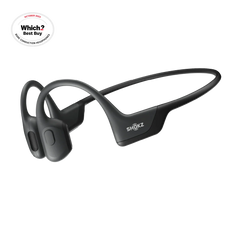
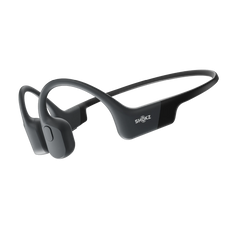
1. Shokz OpenRun Pro 2
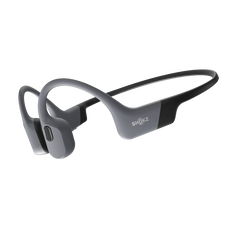
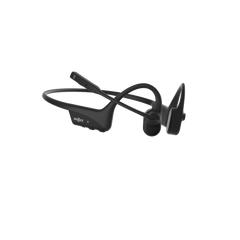
The Shokz OpenRun Pro 2 is the best option for athletes who want serious performance without sacrificing situational awareness. Built around bone conduction technology, it transmits sound through the cheekbones rather than the ear canal, keeping your ears completely open to the world around you.
The dual-driver design is a significant step forward from previous generations, giving you deeper bass and more detailed audio. The titanium frame wraps firmly around the back of the head and sits securely regardless of how hard you're pushing. For runners, cyclists, and anyone training outdoors, this is one of the top-rated workout headphones on the market right now.
Key features:
- Innovative dual-driver design for deep, rich bass
- Bone conduction open-ear design for full situational awareness
- Nickel-titanium alloy frame for a snug, secure fit across different activities
- Up to 12 hours of playback per charge
- 5-minute Quick Charge gives 2.5 hours of listening
- Upgraded noise-cancelling microphones for clear calls
- IP55 rating for sweat and water resistance


2. Beats Powerbeats Pro 2
The Powerbeats Pro 2 is designed for athletic use, with a rebuilt earhook made from nickel-titanium alloy that flexes to fit different ear shapes and stays put through intense movement.
It offers heart rate monitoring, using optical sensors on each earbud to measure your pulse in real time, feeding data to compatible fitness apps as you train. It also comes with an Apple H2 chip, Active Noise Cancelling, Transparency mode, and Personalised Spatial Audio with head tracking.
Key features:
- Rebuilt nickel-titanium earhook tested with nearly 1,000 athletes
- Heart rate monitoring via optical sensors on each earbud
- Active Noise Cancelling and Transparency mode, powered by Apple H2 chip
- Up to 10 hours of playback per bud; 45 hours total with the case
- Fast Fuel: 5-minute charge gives 1.5 hours of playback
- Three mics and a voice accelerometer per earbud for call clarity
- IPX4 sweat and water resistance
- Wireless charging case (33% smaller than the previous generation)
3. JBL Endurance Race 2
The JBL Endurance Race 2 offers an IP68 waterproof and dustproof rating, which puts them among the most durable earbuds in this category. They can handle being submerged in over a metre of water, in both fresh water and salt water. The charging case is IPX2 water-resistant as well.
It uses twistlock technology to keep the earbuds in position using an ergonomic wing enhancer, creating a seal that stays firm through sprints, jumps, and direction changes. The 6.8mm dynamic drivers produce JBL's signature bass-heavy sound, which many athletes find motivating at high volumes.
Key features:
- IP68 waterproof and dustproof rating, including submersion resistance
- IPX2 water-resistant charging case
- Twistlock technology for a stable, locked-in fit during intense movement
- 6.8mm dynamic drivers with JBL Pure Bass sound
- Active Noise Cancelling and Smart Ambient mode
- 12 hours of playback per bud; 48 hours total with case (ANC off)
- Speed charging: 10 minutes charges 4 hours of playback
- Four beamforming mics (two per earbud) for call quality
- Six Sports Mode presets and customisable EQ in the JBL Headphones app
- Bluetooth 5.3 with multipoint connection
4. Sony LinkBuds Fit
Sony has form when it comes to making earbuds that are comfortable enough to forget you're wearing them, and the LinkBuds Fit carries that reputation well. Weighing in at around 4.9g per earbud, these are light, and the silicon wing-tips keep them secure without adding pressure or discomfort.
Under the hood, the LinkBuds Fit uses Sony's Dynamic Driver X and Integrated Processor V2. This offers real-time noise-cancelling optimisation and support for LDAC and Hi-Res Audio Wireless.
Key features:
- Dynamic Driver X for wideband, detailed audio
- Integrated Processor V2 (same as Sony WF-1000XM5) for real-time ANC optimisation
- Auto Ambient Sound Mode that adjusts to your surroundings automatically
- LDAC support and Hi-Res Audio Wireless
- Air Fitting Supporters for a secure, low-pressure fit
- Weighs approximately 4.9g per earbud
- Up to 5.5 hours per charge; 21 hours total with case
- Quick charge: 5 minutes gives 60 minutes of playback
- IPX4 water resistance
- Multipoint connection for two devices
5. Sennheiser Sport True Wireless
The Sennheiser Sport True Wireless offers two physical ear adapter types: open and closed. The open adapters let ambient sound in naturally while reducing body-borne noise like your own footsteps or breathing. The closed adapters block out the outside world for more focused listening. You can switch between them in seconds without needing app interaction.
Sound is handled by Sennheiser's 7mm TrueResponse dynamic driver, which offers detailed sound with strong bass and good separation.
Key features:
- 7mm TrueResponse dynamic driver with full bass and clear sound
- Adaptable Acoustics: physical open (Aware) and closed (Focus) ear adapters
- Up to 9 hours of playback per charge; 27 hours total with case
- Quick charge: 10 minutes gives 1 hour of playback
- IP54 dust, splash, and sweat resistance
- Four beamforming mics (two per earbud) for call quality
- Bluetooth 5.2 with aptX, AAC, and SBC codec support
- Interchangeable ear fins in four sizes for a personalised, secure fit
- Smart Control app with 3-band EQ and six sound presets
Comparison Table
|
Headphone |
Technology |
Battery Life |
IP Rating |
Best for |
|---|---|---|---|---|
|
Shokz OpenRun Pro 2 |
Bone Conduction |
12 hrs |
IP55 |
Outdoor runners, cyclists |
|
Beats Powerbeats Pro 2 |
In-Ear with Earhook |
10 hrs |
IPX4 |
Athletes, iOS users |
|
JBL Endurance Race 2 |
In-Ear with Wing Lock |
12 hrs |
IP68 |
High-intensity & water sports |
|
Sony LinkBuds Fit |
In-Ear with Wing Tip |
5.5 hrs |
IPX4 |
All-day wear, gym use |
|
Sennheiser Sport True Wireless |
In-Ear with Fins |
9 hrs |
IP54 |
Runners, outdoor training |
Tips For Choosing Your Workout Headphones
With so many options in the market, it's easy to get drawn in by features you won't actually use. These tips will help you choose a pair that actually fits your training.
Think About Where You Train Most
The right headphone for road running is different from the right one for lifting in a gym. Outdoor athletes benefit most from open-ear designs or headphones with good transparency modes for good situational awareness. Gym users can lean towards better ANC and sound isolation without the same risk. Know your primary training environment before anything else.
Match the IP Rating to Your Activity
If you sweat heavily, train in the rain, or get close to water, your IP rating is important. IPX4 handles sweat and splashes fine. IP55 adds a bit more protection against sustained moisture exposure. IP68 is the gold standard for anything close to full water immersion. Don't overpay for a high rating if your sessions are mostly indoors.
Battery Life Vs. Charging Speed
Total battery life sounds impressive, but daily usability is what counts. A pair with nine to twelve hours per charge is good for most training schedules, as long as you charge them between sessions. If you're prone to forgetting to charge your kit, prioritise a model with fast charging.
Don't Overlook Microphone Quality
Mic performance is important if you take calls during or around your workouts. Look for models with beamforming microphone arrays and noise suppression. Two mics per earbud is a reasonable minimum; four total gives noticeably better call clarity in wind or high-ambient environments.
Final Thoughts
The best workout headphones for you depend on how and where you train. Outdoor runners and cyclists should look first at open-ear options; the Shokz OpenRun Pro 2 is hard to beat in that space, with its bone conduction design keeping your ears free and your awareness intact.
Athletes who want premium features like heart rate monitoring and ANC in a secure in-ear format will find the Beats Powerbeats Pro 2 worth the investment. The JBL Endurance Race 2 is the pick for anyone who trains hard in extreme conditions and needs serious waterproofing at a reasonable price.
Whichever direction you go, the most important thing is to choose a pair that fits your ears securely and holds up to your training conditions.

Frequently Asked Questions
Do workout headphones stay secure during running or HIIT workouts?
It depends on the design. Headphones built with earhooks, Twistlock wing enhancers, ear fins, or wraparound titanium frames are specifically designed to hold their position during intense movement. Standard earbuds without any additional securing mechanism are more likely to shift during HIIT workouts or running.
Are over-ear headphones suitable for gym workouts?
Over-ear headphones can be suitable for gym use, particularly for lifting sessions where head movement is more controlled, but they come with trade-offs. They tend to be bulkier, get warm quickly, and can shift under the weight of the ear cups during dynamic movements.
Can workout headphones handle heavy sweating?
Yes, as long as you pick the right IP rating. An IPX4-rated pair can handle sweat and splashing from any direction, which covers most gym and indoor training. For those who sweat heavily or train outdoors in wet conditions, an IP55 or IP68 rating gives better protection.
Are workout headphones safe for outdoor running?
They can be, but it depends on the design. Traditional in-ear headphones with ANC or passive isolation can reduce how much you hear of traffic and other hazards, which is a safety concern. Open-ear designs like the OpenRun Pro 2 keep your ears fully uncovered, so you hear your music and your surroundings at the same time. If you prefer in-ear headphones, consider using transparency mode or the open ear adapter option.