




Picking the best headphones for fitness sounds simple enough until you're three minutes into a run and your earbud is halfway down your ear canal, or you've completely missed the cyclist coming up behind you. Not every pair of headphones is built for movement, and the one that's perfect for someone lifting in the gym could be the wrong choice for someone out on a trail.
Let’s explore what you need for different fitness scenarios, so you can find something that works for how you move.
Best Headphones for Gym Workouts and Strength Training
The gym has a particular set of challenges. Repetitive movements like overhead presses, pull-ups, and deadlifts can dislodge earbuds that aren't secured properly. There’s ambient noise, clinking weights, loud music, and group classes running in the background. This means you want something that gives you your own audio space without completely cutting you off from a spotter or instructor.
In this setting, over-ear headphones with good passive isolation work well if you prefer to be in your own world. They sit securely, they rarely fall off mid-set, and the larger ear cups tend to handle sweat better than in-ear tips. However, they tend to be bulky, and wearing a big pair of over-ears during high-rep circuits or anything involving lying down can be uncomfortable.
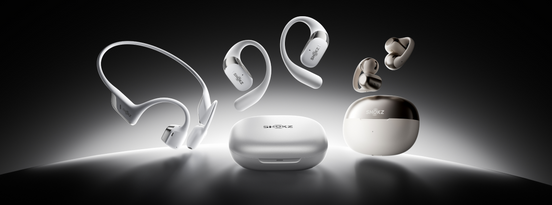
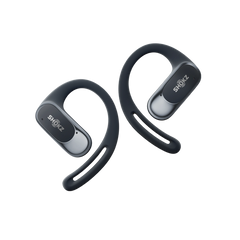
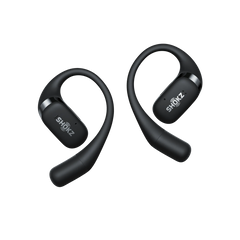
A great alternative is an open-ear option. They give you your music without closing off your ears, so you can hear instructions, music from the gym floor, or someone calling your name. The Shokz OpenFit 2+ works well here; the redesigned golden curve ear hooks keep the earbuds secure during lifting sets, and the open-ear design means you stay aware of everything going on around you. The IP55 rating handles sweat efficiently.
True wireless earbuds with ear fins or secure hooks are also popular in gym settings. They're compact, lightweight, and stay in far better during repetitive movement than standard earbuds. You just need to find a pair with a stable fit rather than one that relies entirely on in-ear pressure to stay in place.

Best Headphones for Cardio Workouts
For cardio, you need headphones that can deal with lots of sweat and intense movement. Whether you're on a treadmill, rowing machine, or exercise bike, you're generating a lot of heat and moisture, and your headphones need to cope with both.
Open-ear headphones work perfectly here. Because nothing is being pushed into the ear, there's no pressure, no heat buildup, and no irritation during long sessions. The Shokz OpenFit 2+ offers up to 11 hours of playback on a single charge and up to 48 hours with the case, more than enough for daily cardio sessions without needing to top up constantly.
In-ear designs with a good seal can also be considered because they tend to stay put through the repetitive rhythm of cardio. The main risk here is ear fatigue. When you're wearing something for 45 minutes to an hour on a treadmill, pressure and heat inside the ear canal can start to feel uncomfortable.
One thing worth noting for cardio: you want physical controls rather than touch sensors. Swiping on a touch panel with sweaty fingers mid-workout can lead to pausing your music at the worst possible moment.
Best Headphones for Running (Road, Track, and Trail)
Running is probably where headphone choice matters most, and where the wrong choice can actually put you at risk.
On roads and shared paths, you need to hear traffic. On trails, you need to hear other hikers, mountain bikers, or uneven terrain underfoot. Sealing your ears completely with noise-cancelling headphones is a safety concern that runners often underestimate until something goes wrong.
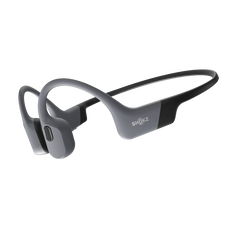
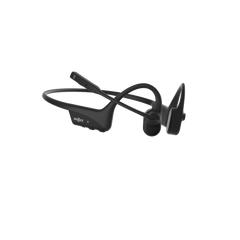
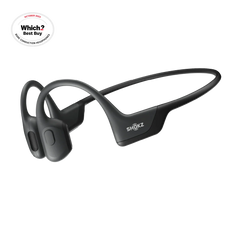
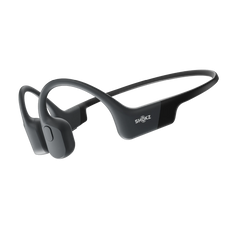
Open-ear headphone technology excels in addressing this. Bone conduction headphones, like the Shokz OpenRun Pro 2, work by sending sound through your cheekbones rather than through the air in your ear canal. Your ears stay fully open to the environment the whole time, so you catch every sound around you without sacrificing your music. The nickel-titanium frame wraps securely around the back of the head, and because there's nothing sitting in the ear, there's nothing to fall out mid-stride.
Open-ear earbud designs with a hook that sits outside the ear canal serve the same purpose. They keep ambient sound fully accessible, and with a secure ear hook, they stay in place through the full range of running motion.
For trail running specifically, a secure, bounce-free fit is non-negotiable. Any movement in the earbuds distracts your attention from the ground and your footing. Look for designs with wraparound hooks or titanium frames that stay locked in place even over rough terrain.
Weather resistance is equally important for outdoor runners. Something rated IP55 or higher is practical when the weather is not so favourable.
Best Headphones for Cycling
Stationary cycling on an indoor bike or turbo trainer means you're dealing with high sweat output over extended sessions. The resistance of indoor cycling is tough, and you're often at a fixed position, which makes over-ear options slightly more viable since there's no wind noise to manage. The priority here is comfort over time and sweat resistance. Sessions can run an hour or more, so comfort becomes as important as sound quality.
However, the case is different for outdoor cycling. Wind noise at speed can make closed-ear headphones almost useless because the buffeting drowns out your music anyway. More importantly, road cycling on public roads carries the same safety considerations as running; you need to hear traffic, especially behind you.
Bone conduction headphones are widely used by cyclists for exactly this reason. They keep your ears open to the environment completely while giving you audio, which is about as close to the ideal solution as currently exists.
Best Headphones for HIIT, Cross-Training, and Functional Workouts
HIIT and functional training are probably the most demanding environments for fitness headphones. You're doing box jumps, burpees, agility drills, floor work, and overhead movements, often switching between them with minimal rest. Any pair that's marginally insecure will find a way to fall out.
Sweat resistance needs to be taken seriously in this context, too. HIIT generates more sweat per minute than almost any other training style, and prolonged exposure to moisture degrades both the electronics and silicone ear tips over time.
You also need headphones requiring minimal adjustment during sessions. You shouldn't have to stop to push your earbuds back in or reposition a headband between intervals. The best option for HIIT is something you put in at the start and forget about entirely until the cool-down.
Open-ear clip designs like the Shokz OpenDots ONE offer a low-profile clip mechanism that locks onto the ear and stays there. Over-ear designs with a wraparound headband also work well here.
Best Headphones for Yoga, Stretching, and Recovery
Yoga and stretching put the body in different positions than most other workouts. You're lying down, pressing your head into a mat, changing orientation frequently, and in some cases wearing the headphones for an hour or more in a quiet environment.
Over-ear headphones are the hardest to use here. They press into the side of your head during floor poses, create warmth and sweating around the ears during a long session, and can shift out of position during inversions.
In-ear designs work better for floor-based sessions, but the comfort issue still applies during long holds. You may find it more comfortable if the earphones have foam tips and a lightweight body.
Open-ear designs are particularly well-suited to yoga because they allow you to hear the instructor's cues clearly without removing your earbuds. They also put zero pressure on the ear canal, allowing you to stay comfortable during long sessions. Featherlight earbuds with a flexible hook, like the Shokz OpenFit 2+, sit comfortably while lying down, seated, and standing positions without digging into the ear or shifting out of place.


Best Headphones for Fitness for Home Workouts
You don’t have traffic or hearing instructions when you work out at home. So, the primary factor here should be fit and comfort. A pair that shifts, wobbles, or falls out every few minutes can distract you. And even when they fit perfectly, earphones with materials that are too rigid or too much pressure can cause ear pain. The most comfortable and secure headphones remain the open-ear ones.
Noise cancellation features can also be more useful here than in outdoor settings. Home environments typically have their own distractions, household noise, nearby conversations, and the TV in the next room. A pair with good active noise cancellation can help you stay in the zone during a living room session.
Wrapping Up
There is no single pair of fitness headphones that is objectively the best for every situation. A road runner needs safety above everything else. A HIIT athlete needs something that stays in place. A yoga practitioner needs weightless comfort. A home gym user might prioritise noise cancellation and sound quality above all.
What is consistent across all of them is that fit, sweat resistance, and battery life are baseline requirements.
If you do most of your training outdoors or in settings where staying alert matters, consider choosing open-ear headphones designed for sports.

Frequently Asked Questions
Are noise-cancelling headphones good for fitness training?
Noise-cancelling headphones work well for specific scenarios like indoor gym sessions or home workouts, where blocking external distraction helps you focus. For outdoor training, running, cycling, or hiking, they're a poor choice when you consider safety. You lose awareness of traffic, other people, and changes in your environment. In those settings, open-ear designs are a much safer and more practical option.
What type of headphones are safest for outdoor workouts?
Open-ear headphones are the safest option for outdoor training. They allow you to hear traffic and other sounds from your environment while still listening to music, podcasts, or guided workouts.
How important is sweat resistance when choosing the best headphones for fitness?
Sweat resistance is very important. Sweat is more corrosive to electronics than rain because of its salt content, and repeated exposure without proper protection degrades headphones faster than most people expect. For light workouts, get headphones with at least an IPX4 rating. For intensive cardio, HIIT, or cycling in varied weather conditions, IP55 or higher is a more practical choice.
Can one pair of headphones work for all types of fitness activities?
It can, with some compromise. The most versatile fitness headphones, like the Shokz OpenFit 2+, tend to combine a secure fit, open-ear or bone conduction design for situational awareness, solid sweat resistance, and long battery life.