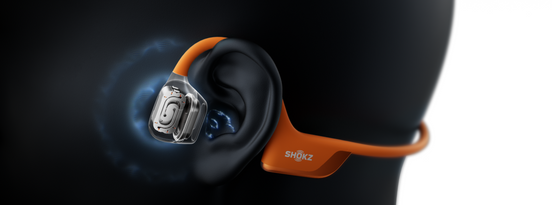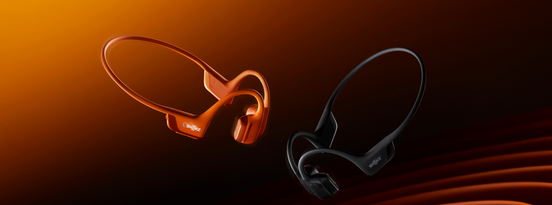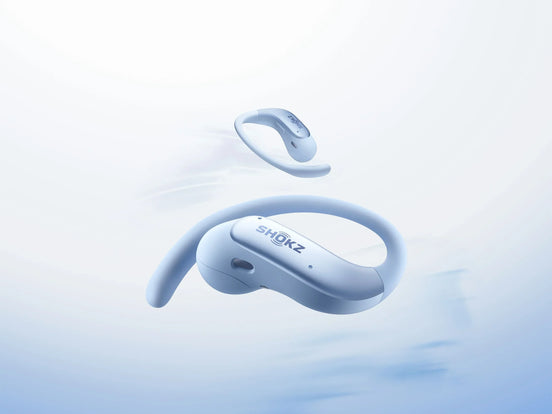
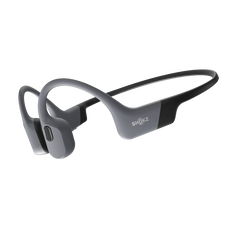


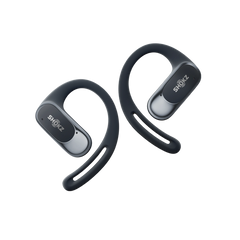
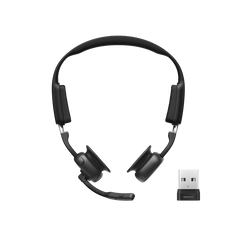
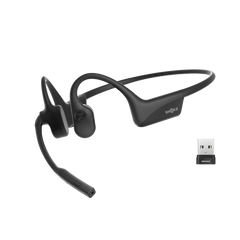
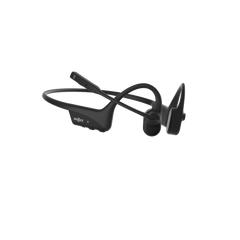
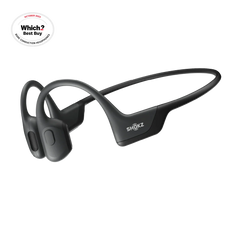
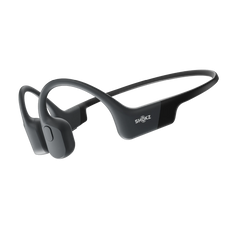

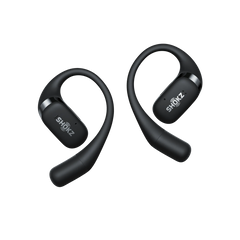


Walk into any gym, office or train carriage right now, and you'll spot them: headphones that don't go in the ear at all. What used to be a niche pick for runners has turned into a $1.1 billion category — and it's still accelerating. This summer, we partnered with NielsenIQ on a global whitepaper — surveying more than 5,000 consumers across the US, UK, France, Germany, Japan and South Korea, to understand exactly how big this shift is, and what's driving it. Here's what the data showed.
The Numbers: A $1.11 Billion Category Growing 45% Year on Year
The headline figure is hard to ignore: open-ear headphone sales reached $1.11 billion year-to-date (excluding North America and Russia), up 45% year-on-year. What stood out to us most wasn't just the size of that number, but how broadly the growth was spread. Eastern Europe grew 177%, Latin America 169%, and the Middle East & Africa 141% — while even a mature market like Western Europe still grew 77%. The breadth of this growth suggests that open-ear is expanding across multiple markets rather than being limited to a single regional trend.

Category Loyalty Is Building, Not Fading
Fast growth on its own doesn't tell you whether people actually stick around once they try something new. This is where the data got interesting: 43% of open-ear buyers already own another open-ear headphone, and 76% of open-ear sales come from users who previously bought other headphone types. Together, these figures suggest that open-ear is both attracting people who already use other headphone types and becoming part of a broader multi-headphone repertoire.

Why Are Open-Ear Headphones Popular? Comfort Is a Key Differentiator
Every headphone category competes on something. Traditionally, that's been sound quality and price. Open-ear is winning on a different battlefield entirely: wearing experience is the top purchase driver for open-ear buyers, cited by 28% — noticeably ahead of the factor that dominates over-ear purchasing decisions, where 27% rank sound quality as their top priority. That's not a small distinction. It means open-ear headphones aren't competing to be a cheaper or trendier version of what already exists — they're solving a problem traditional headphones were never built to solve.
Not sure which style fits you best? See how different types of open-ear headphones compare and how to choose.
What's Fuelling the Growth
A few forces are converging behind these numbers. The health and wellness boom has kept demand for sport-friendly audio high, in a market that's grown from $6.3 trillion in 2023 to a projected $9 trillion by 2028 — a 7.3% annual growth rate that's outpacing most other consumer categories. Gen Z — at 2.02 billion people, the largest generation in history — is coming of age as a genuinely audio-first cohort: 13–34 year-olds now spend 4 hours 30 minutes a day with audio, compared to 4h03m for 35–55 year-olds and 3h17m for those 55 and older. And steady technical improvements have made open-ear sound genuinely competitive rather than a compromise — all of which helps explain why growth has accelerated the way it has.
Where Shokz Fits In

A Pioneer in Open-Ear Audio Since 2011
Most of the brands now competing in open-ear showed up once the growth was already visible. We didn't. We filed our first open-ear patent back in 2011, years before "open-ear" was a category anyone was tracking, let alone one worth $1.1 billion. We built our entire product philosophy around one idea before it was fashionable: headphones shouldn't have to seal you off from the world.
A Global Footprint Built Over 15 Years
That early bet has compounded into real scale. Today, Shokz products are sold in over 70 countries and more than 28,000 stores worldwide, with over 30 million units sold to date. We're not a newcomer testing the waters — we've been building this category, market by market, for over a decade.
What Keeps Shokz Customers Coming Back
Scale only matters if people actually stay loyal once they've bought in. Among Shokz buyers, 57% had already owned Shokz before their most recent purchase — meaning more of our customers stay with Shokz than switch away from it, a strong signal of in-category loyalty. Among our loyal customers, 63% cite sound performance and 56% cite wearing experience as the reason they keep coming back, with another 56% pointing to factors like stable connectivity and water, dust and sweat resistance.
One Brand, Three Ways to Listen
We've built that focus into three dedicated product lines rather than a single one-size-fits-all design: Sports (like OpenRun Pro 2), for the moments where security and durability matter most; Lifestyle (like OpenFit Pro and OpenDots 2), for all-day comfort in everyday settings; and Communication (like OpenComm 2 UC), purpose-built for calls and hybrid work. Different needs, same underlying philosophy.
The Bottom Line
The open-ear category is growing fast, broadly, and — critically — sustainably, with the data showing genuine repeat behaviour rather than a fad. Within that category, Shokz has been building for over a decade, at meaningful scale, with a customer base that keeps coming back. If you're comparing open-ear headphones, look at the factors that matter most for your use case — wearing comfort, fit, sound quality, awareness, durability and connectivity — then compare individual models and brands against those needs.