


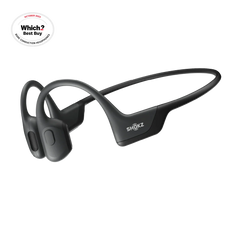
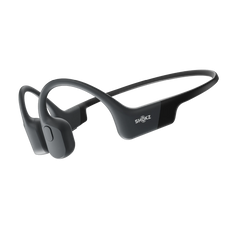

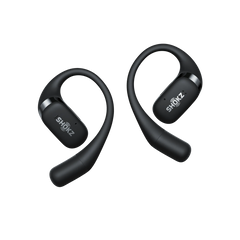


Not every open-ear headphone is built for the same job. Some are engineered to survive a swimming pool, others are built to disappear on your ear during a ten-hour workday, and others are designed purely to get you through a run without ever needing an adjustment. If you're trying to work out which one actually fits how you live, here's a straightforward guide to our open-ear range, organised by what you're actually trying to do with them.
How to Choose Open-Ear Headphones
Before getting into specific models, it's worth being clear on what to prioritise. If you're buying open-ear headphones for the first time, start with how they'll feel to wear for the length of time you'll actually have them on, not just how they sound in a five-minute demo. Wearing experience is the top purchase factor for 28% of open-ear buyers, ahead of sound quality, and that holds true whether you're choosing for the gym, the pool, or a full day of back-to-back calls. Once fit is sorted, sound quality, battery life and durability for your specific use case (waterproof for swimming, secure for running, clear for calls) are what separate a good pick from the right one.
Best for Running & Outdoor Sport: OpenRun Pro 2
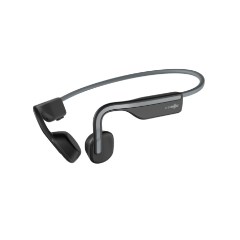
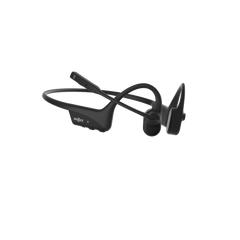
If running, cycling or general outdoor training is the main reason you're buying, start here. OpenRun Pro 2 is a bone conduction headphone built specifically around movement: the ear canal stays completely open, so you can hear traffic, other runners and your own breathing exactly as you normally would, and the unibody frame uses titanium memory wire that shifts the centre of gravity forward, which meaningfully improves how secure the fit feels once you're actually moving rather than just trying it on standing still. Under the hood, DualPitch™ technology pairs a bone conduction driver with a separate air conduction driver for deeper, more balanced sound than earlier bone conduction designs managed.
This is also the sub-type with the clearest data behind it: bone conduction headphones see 54% of their use during sport, the highest sport-usage share of any open-ear design, largely because the design sits comfortably under a cap or sunglasses without any ear tips to dislodge.


Best for: road running, trail running, cycling, gym sessions where you don't want anything in your ear canal.
Best for Swimming: OpenSwim Pro
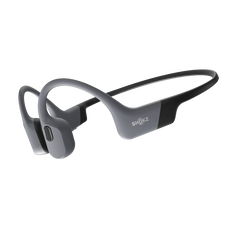
Regular open-ear headphones, OpenRun Pro 2 included, aren't built for underwater use. OpenSwim Pro is a separate bone conduction design engineered specifically for it, built to handle full submersion rather than just splashes or sweat, since Bluetooth doesn't function underwater the same way it does on land, so it switches seamlessly to built-in MP3 storage once you're in the water. It's the headphone to reach for specifically when you're training in a pool or open water and need audio that keeps working once you're actually swimming, not just standing poolside.


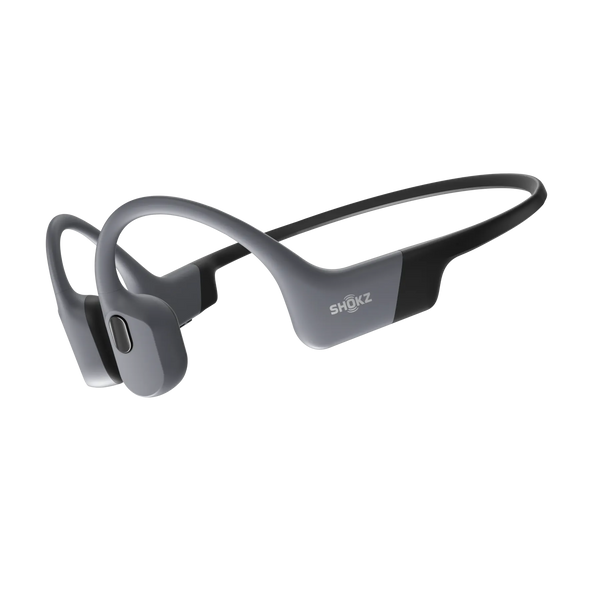
Best for: swim training, triathlon prep, anyone who wants music or audio during pool sessions specifically.
Best for Calls & Hybrid Work: OpenMeet
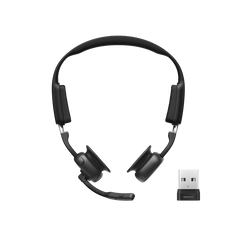
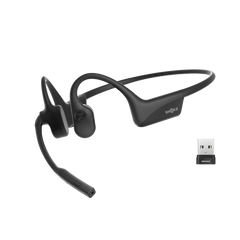
If most of your headphone use is calls, video meetings and hybrid work rather than music, OpenMeet is worth a closer look. It's a bone conduction headset built around clarity on the other end of the line as much as clarity for you: a dual-microphone system powered by Qualcomm's cVc (Clear Voice Capture) technology isolates your voice from background noise, delivering up to 98.6% noise reduction in Shokz lab testing, so calls taken from a busy home, a co-working space or mid-commute still come through clearly. Because the ear canal stays open throughout, it's also genuinely comfortable to leave on between back-to-back meetings, which is where most sealed headsets start to become uncomfortable.


Best for: frequent video calls, hybrid or remote work, anyone who wants a headset that doesn't need to come off between meetings.
Best Ear-Hook for Everyday Comfort: OpenFit Pro
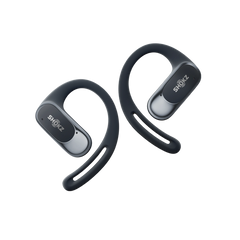
If you're looking for one pair to cover most of your day, not just sport or calls specifically, OpenFit Pro is our flagship ear-hook design, and the first Shokz headphone to feature Open-Ear Noise Reduction, combining our signature open design with genuine noise control rather than making you choose between the two. Built for all-day wear across whatever you're actually doing, commuting, working, unwinding at home, the ear-hook design gives a more secure fit than a clip-on style while still keeping the comfort and awareness benefits of an open ear canal, which is why ear-hook designs consistently show a fairly even mix of use across sport, commuting and public places rather than skewing heavily toward one scenario.


Best for: buyers who want a genuine all-rounder rather than a headphone built around one specific activity, especially if some noise reduction on top of open-ear awareness matters to you.
Best Ear-Clip for On-the-Go Style: OpenDots 2
Ear-clip designs are a genuinely versatile everyday option: the same research found ear-clip headphones see meaningful use across sporting (46%), commuting (41%) and public places (32%) alike, rather than skewing heavily toward one activity. What sets OpenDots 2 apart isn't just that spread of use, though — it's the lack of any hook or hold around the ear entirely, which makes it the pick for anyone who specifically doesn't want that sensation, whether that's for style reasons or simply personal comfort preference.


Best for: everyday wear where style and a low-profile fit matter as much as function.
Quick Comparison
The Bottom Line
There isn't a single "best" open-ear headphone in this range, because they're built to solve genuinely different problems. If you already know what you'll mostly be using them for, sport, swimming, calls or simply everyday wear, that should decide it. If you're still not sure, come back to the principle from the top of this guide: prioritise how a pair actually feels to wear for hours at a time, because that's what most people end up caring about most once the novelty of a new pair wears off.
Frequently Asked Questions
Can I go swimming with OpenRun Pro 2?
No. OpenRun Pro 2 is built to resist sweat and rain splashes, but it isn't designed for submersion. For swimming or regular pool training, OpenSwim Pro is the model built specifically for that, switching to onboard MP3 storage underwater since Bluetooth doesn't work reliably once submerged.
What's the actual difference between OpenFit Pro and OpenDots 2?
Both are open-ear earbuds, but the fit and focus differ. OpenFit Pro uses an ear-hook design and is our first headphone with genuine Open-Ear Noise Reduction, aimed at buyers who want some background noise control without fully sealing the ear. OpenDots 2 uses a clip-on design with no ear-hook at all, prioritising a lighter, lower-profile fit for everyday wear.
Does OpenMeet work with my phone, or only my laptop?
Both. OpenMeet is built primarily around calls and meetings on a computer, using its wireless adapter for a stable connection to Windows and macOS devices, but it also pairs directly with Android and iOS phones like a standard Bluetooth headset.
Do I need the Shokz app to use these headphones?
No, all five work perfectly well straight out of the box. The app is worth downloading if you want more control though: things like switching EQ modes, adjusting noise reduction levels, managing multipoint pairing, and checking battery status are all handled through it.
Is it actually safe to run or cycle near traffic wearing these?
Open-ear design means you'll hear approaching traffic, cyclists and pedestrians far more clearly than with sealed headphones, which is one of the main reasons people choose them for outdoor training. That said, headphones of any kind can still be distracting, so we'd always recommend keeping the volume at a sensible level and following local road safety rules for your activity.