





Anyone who has finished it knows that the Great North Run does not feel like an ordinary race. For one Sunday every September, 13.1 miles of Tyneside becomes a rolling street party, and the running is only half of the experience.
That is why so many runners rate it the best race experience in the UK. The course itself is famous, but it is the people watching it, an estimated 200,000 of them, who turn a hard half marathon into a day you replay for weeks afterwards.
This guide takes you along the Great North Run route from a runner's point of view. We’ll cover what each section feels like, where the noise peaks, what the crowds are really like, and why Newcastle has earned its reputation as a running city.
- Why Great North Run Feels Different from Other Races
- Running the Great North Run Route
- What the Crowd Experience Is Really Like
- Newcastle Running Culture
- Why Open-Ear Headphones Make Sense on Race Day
- First-Time Runner Perspective
- Frequently Asked Questions
- Final Thoughts
Why Great North Run Feels Different from Other Races
More Than Just a Half Marathon
The Great North Run is one of the UK's largest half marathons, with a field of around 60,000 taking part together. This means entire streets are out on their doorsteps, with Metros and ferries full of supporters criss-crossing the route. The city treats race day as a fixture of its calendar in a way that’s rare to see in other places.
The Famous Newcastle Atmosphere
Geordie crowds have a reputation among runners, and they earn it every year. Spectators stand several deep through the city, brass bands and drummers set up on corners and roundabouts, and locals hand out jelly babies, orange segments and, on warm years, a welcome blast from a garden hose.
There are charity cheer stations as well. This community support does not let up for 13.1 miles.

Running the Great North Run Route
Great North Run Route Overview
Runners start high in Newcastle city centre, cross the River Tyne early, work east through Gateshead and South Tyneside, then drop to the coast for a seafront finish. It is a point-to-point course covering the full 13.1 miles, with a quick start, an undulating middle and a flat final mile beside the beach.

Great North Run route map (Route details are subject to the official event announcement.)
Route Map Highlights
When you check the official Great North Run route map, you’ll see that there are five stand-out moments in the race. Here’s how each of them feels:
Start Area in Newcastle
The start pens fill the A167 near the Town Moor. The last half hour before the gun is an experience in itself. You see people warming up on the grass, charity vests in every colour, a DJ working the crowd, and the nervous energy of 60,000 people gathered in one place.
The day starts to feel real as you shuffle slowly towards the line and spectators clap you forward before you have run a step. Get your bag drop and toilet queue done early, then soak it up.
Crossing the Tyne Bridge
You get to the bridge just after the first mile, and this is the most iconic moment of the race for many runners. The road bends, the green arch fills the sky, and the noise rolls back at you off the girders.
You see landmarks like the Quayside with its parade of bridges, and the Red Arrows often do a spectacular flypast right as the runners cross the bridge. Most runners slow down here without meaning to, purely to take it all in.
Through Gateshead
Things quieten briefly after the climb away from the river, then Gateshead brings the cheer back. You see families on garden walls, kids collecting high fives, pockets of music strung along the long Felling Bypass stretch. The support here is thinner than in the city, but it is more personal.
This is also where the pacing changes. The field spreads out, and the race settles into a rhythm you can actually control.
Heading Towards the Coast
Somewhere along the John Reid Road, the mood changes again. The dual carriageways give way to residential streets, and you feel the sea breeze before getting to the sea. There’s been a music zone here in recent years to give tired runners a well-timed lift.
South Shields Finish Line
The closing mile along The Leas is unlike any other finish in British running. The North Sea on your left, grandstands and packed barriers on your right, and a noise that builds all the way to the gantry. The image of crossing the line with the beach behind you is something that stays with most runners for a long time.

What the Crowd Experience Is Really Like
Thousands of Spectators Along the Route
Organisers estimate that over 200,000 people watch the race in person. This includes families outside their houses, volunteers at the water stations, church groups and community stalls, charity supporters with banners and foam hands, residents who have watched the race pass their window for decades.
The Loudest Sections of the Course
The start on the Central Motorway and the Tyne Bridge crossing are known for the loud support and cheers from the crowd. After those, the biggest lifts come from the final stretch along the seafront, which becomes deafening as the finish appears.
Motivation from the Crowd
There is a reason so many runners come away from the Great North Run with an unexpected PB. The difference is 13 miles of people shouting for you. Print your name on your vest, and you will hear it hundreds of times before South Shields.
This type of support impacts your race significantly. It distracts from discomfort, resets your effort when it sags, and hands you target after target to run to. When your pace wobbles around mile ten, someone's nan yelling encouragement does more than any gel.
Newcastle Running Culture
Why Newcastle Is a Great Running City
Newcastle running culture does not appear once a year for race weekend. The city is compact, flat along the river and green almost everywhere else. There are two Saturday parkruns, on the Town Moor and in Jesmond Dene, and a busy club scene threaded through it. The race itself grew from this soil when Brendan Foster, a North East Olympian, founded it in 1981, and the region has treated running as its own ever since.
Popular Running Routes in Newcastle
If you are training locally, or staying for the weekend and want to stretch your legs, here are some running routes in Newcastle:
Quayside Route
Flat, traffic-free riverside paths beneath the Tyne's famous bridges. Run past the Gateshead Millennium Bridge and back for easy miles with some of the best views in the city.
Tyne Bridge Loop
Cross the iconic Tyne Bridge, drop down to the river, and return via the Millennium Bridge. A great way to rehearse the race's most memorable moment.
Exhibition Park
Enjoy flat laps around the bandstand and lake, just minutes from the city centre. Perfect for interval training and controlled pace sessions.
Town Moor
A huge open grassland area with long, uninterrupted stretches for steady miles. Home to Town Moor parkrun every Saturday and located close to race assembly areas.
Jesmond Dene
A peaceful wooded valley featuring soft trails, bridges and a waterfall, with short climbs that help prepare your legs for the tougher miles.
Why Open-Ear Headphones Make Sense on Race Day
Can You Listen to Music During Great North Run?
Yes. Music is allowed at the Great North Run, but the organisers ask runners to keep the volume low, stay aware of their surroundings, and follow marshal instructions. You will find people with running headphones everywhere across the field. The event simply expects you to run as you can hear.

The Challenge of Traditional Earbuds During Races
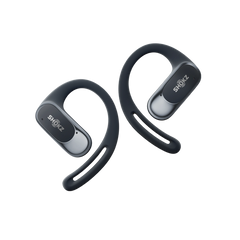
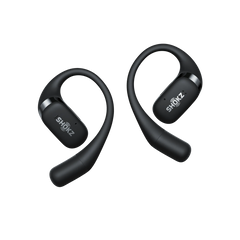
Sealed in-ear buds are designed to shut the world out, which is exactly what you want to avoid on race day. With silicone tips blocking your ear canal and noise cancellation doing the rest, you lose the start-line announcements, the marshal telling you to keep left, and most of the crowd you came for. A comparison of ANC earbuds and open-ear earbuds shows how differently the two designs treat your surroundings.
There are physical problems too. In-ear earbuds tips become loose as you sweat and pressure builds after wearing them for a few hours, and it is part of why in-ear earbuds hurt for so many people on long runs.
Benefits of Shokz Open-Ear Headphones
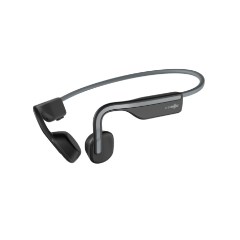
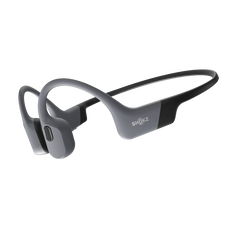
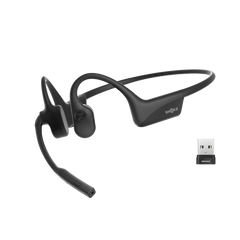
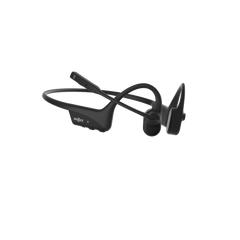
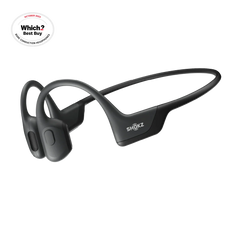
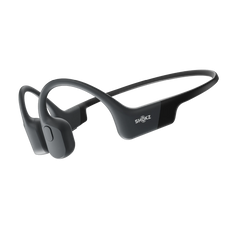
The Shokz Shokz OpenRun Pro 2 has become one of the most common sights at UK start lines, and it suits this race in particular. It rests on your cheekbones and delivers sound through bone conduction, while the DualPitch™ design pairs the bone conduction unit with its own air conduction speaker for fuller bass, so your ears stay completely uncovered. At roughly 30g, with a 12-hour battery and an IP55 rating against sweat and rain, it is built for exactly this kind of day.


- Hear the crowd: You hear the bands, the name-shouting, and the energy around the bridge. Open ears let the atmosphere come through naturally, while your music plays underneath.
- Stay aware of other runners: With 60,000 runners on the course, you are constantly passing and being passed. Hearing footsteps and calls around you helps keep the race safer and more comfortable.
- Enjoy music without missing the atmosphere: You do not have to choose between your playlist and the race-day experience. That balance is the advantage of open-ear headphones for sports.
- Comfortable for long runs: No ear tips, no pressure, and no mid-race adjustments. The lightweight frame stays secure from the start pen to the finish line.
First-Time Runner Perspective
What Surprises Most First-Time Participants
Every first-timer arrives with expectations. These are the things that still catch them out:
- The scale of the event: It takes the field around an hour to cross the start line, and you will never once run alone. The size only truly lands when you see the road ahead filled to the horizon.
- The crowd energy: Most expect support in the city and at the finish. Don’t be surprised when everything in between — doorsteps, footbridges, and pub gardens — is occupied and loud.
- The finish line experience: The sea appearing at mile 12 does something to tired legs. Many first-timers describe the last mile as the fastest slow mile they have ever run.
- The Newcastle hospitality: Expect conversation in every queue and applause for your medal on the Metro home. The city looks after its runners.
Frequently Asked Questions
What is the Great North Run route like?
It is a point-to-point, city-to-coast course. It runs 13.1 miles from Newcastle city centre, over the Tyne Bridge, through Gateshead and South Tyneside, finishing on the seafront at South Shields. Expect a quick downhill start, an undulating middle and a flat final mile by the sea.
Is the Great North Run route flat?
No. It is undulating, with around 130 metres of total climbing. The main rises come out of Gateshead around mile two and again between miles 11 and 12, and none of them are severe. It is not a pan-flat PB course, but the crowds make up much of the difference.
Is Newcastle a good city for runners?
Yes, one of the best in the UK. It offers flat riverside miles on the Quayside, open grassland on the Town Moor, wooded trails in Jesmond Dene, two Saturday parkruns and an active club scene, all within a compact city.
Where can I train for Great North Run in Newcastle?
Use the Town Moor for long steady runs, the Quayside for flat tempo miles, and Jesmond Dene for hill work to prepare for the climbs at miles two and 11. Town Moor parkrun makes a useful weekly benchmark in the months before September.
Can I wear headphones during Great North Run?
Yes, at a sensible volume. The organisers allow music but expect runners to hear marshals and other participants. An open-ear pair like the Shokz OpenRun Pro 2 keeps you inside the atmosphere while you listen, which is why so many of them line up at this event.
What is the best part of the Great North Run route?
Most runners name the Tyne Bridge crossing at mile one, with the first view of the North Sea at mile 12 a close second. Ask again after race day, though, and plenty will tell you the final mile along The Leas beats both.

Final Thoughts
The Great North Run route is a good half marathon course in its own right, but it is the 200,000 people wrapped around it, and the city that produces them, that make the day worth travelling for. Train on Newcastle's own routes if you can, put your name on your vest, and let the crowd do the rest.
And choose headphones that let the day in. The Shokz Shokz OpenRun Pro 2 keeps your ears open for the bridge, the bands and the shouts of your name, with your music running quietly underneath it all.